Family Life, Social Commentary

Top 10 Tips: Children & Screen time

Unknown

Photo courtesy of the internet. NHYM 2015. 

I was reading an interesting article on children and screen time this weekend in the Times, Screen time and your child: what every parent needs to know, so thought I would share the most salient and pertinent points of the article:

  1. Professor Sonia Livingstone at LSE, a researcher on children and technology and an advisor to the UK Council For Internet Safety, thinks that parents need new guidance away from thinking purely in terms of time limits, towards sharing more of what their children are doing online.
  2. All screen time is not equal; we need to look at the quality of what our children are doing online; are they creative or passively consuming. ‘The challenge is for parents to work out whether they are doing something creative and imaginative or something mindless.’ says Professor Livingstone.
  3. On setting time limits: ‘If they are getting the grades you hope for and expect, if they are lively, creative, talkative and able to develop interests and hobbies, those are indicators that your child is fine.’
  4. Keeping an eye on the balance is key: Are they playing sports, going outside enough, and getting enough face to face interaction?
  5. More than three and a half hours a day on social networks is linked to low self esteem and depression. One study showed that the happiest 10-15 year olds spent no more than one hour a day on social networks.
  6. Aric Sigman, a psychologist, has come up with some time limits. He recommends 30 minutes to 1 hour a day of recreational screen time for 3 to 7 year olds, one hour for 7 to 12 year olds, 90 minutes for 12 to 15 year olds, and two hours for teens aged 16 and over. Wishful thinking. But it’s a good goal.
  7. Start having screen time with the family: make time each week where the whole family goes online and shows each other interesting sites or fun things they’ve discovered. Livingstone recommends one hour per week.
  8. For 15 years the American Academy of Paediatrics has recommended no screen time at all for under twos, but there is evidence that short bursts of time on interactive educational apps can help two to five year olds learn, says Dr. Gummer, a psychologist and play specialist.
  9. Teach your children responsibility about screen time. For younger children, you may need to set time limits and routines, for example two hours a day is accepted by many experts and police them. For older children 11 and over, it’s important to involve them in the process. ‘Parents should help them make decisions rather than trying to control every click which is impossible anyway. They need the skills and resilience to make sensible choices, which are the same skills they need to do their homework and going to bed. Parents can help them get into routines and explain to them that more than two hours a day of screen time is too much.’ says Dr. John Coleman, a teen psychologist researching a book on parents and screens.
  10. Have a screen free day. Boredom is a very important educational skill  because it gives them time and space to create and think about the things they want to do. Coleman recommends one totally screen free day maybe once a week.

Excerpts from The Times Saturday September 12, 2015 

xx

NHYM

http://www.nottinghillyummymummy

@NHyummymummy

Standard
Family Life, Social Commentary

‘Teenage Daughters Mental Health: Please take care of Y(our) daughters…’

images-1

I was having a rather disturbing conversation with a mother of a tween and teen who sends her daughters to arguably the most academic and rigorous girl’s school in Central London, which promises futures of Oxbridge and of ruling the world. She told me that about 50% of all the girls at this said school were suffering from moderate to severe psychological problems, which if you compare it to the normal teenager’s prevalence of 20%, is rather shocking.

What?

She described all kinds of psychological problems in these girls; depression, self-harming, eating disorders, anxiety and suicidal thoughts. It is normal for teenagers to have a higher than normal rate of psychological illness, during a time when hormones are raging, identities are being questioned and formed, and when teens are just more vulnerable and sensitive than most. It is not normal for it to be 50%. That is one out of two girls with bulimia or anorexia, depression or anxiety and others who end up with diagnoses and therapists. Some girls are throwing up during lunch breaks or eating appetite suppressant pills to lose weight. Others discussed their suicidal thoughts with their peers, almost as if it was ‘cool’ to be suicidal, calling their friends and telling them they were going to ‘do it’. Others yet are being diagnosed with more complex illnesses such as Bipolar Affective Disorder and Personality Disorders, requiring inpatient treatments and hours of therapy.

‘I can’t understand why this is happening’

The mother, whose children are well-adjusted and happy, couldn’t understand this shocking phenomenon and couldn’t explain why it was happening. Some people have idiopathic depression, when depression just happens without a cause and may be genetically linked. But in this very specific case in a closed school environment, where there is a higher than normal prevalence of psychological problems, it is obvious that there are triggers. Is it the school, the parents, social media or the peers? The answer is probably a bit of everything and probably dependent on the individual.

The School?

She thought that it wasn’t just in this particular school, but that these problems were apparent in many of the top London schools. The pressure that teens experience every day comes from everywhere: top academic schools which push children academically, even those pupils who probably shouldn’t be at these schools. Pressure from parents who push their children to excel and also fill their days with academic and extra curricular activities. Peers who compare themselves to super models. The ‘myth’ that parents tell their children that they ‘are always the best’. www://www.telegraph.co.uk/education/educationopinion/11643947/We-know-whats-wrong-in-education-so-what-are-we-doing-about-it.html

Another parent, this time from a boy’s school of equal scale, thinks it is a personality type, that hyper-competitive, bright and academic types tend to have behavioural issues, boys in a Asperger’s Syndrome and compulsive kind of way and girls with Eating Disorders and mental health issues. He mentioned that the top boarding schools also have problems, and that it isn’t just endemic in London schools. One of his friend’s daughter had to leave her top-of-the-league boarding school under distressing and difficult circumstances.

Unknown-1

Parents

We all know pushy parents. Need I say more?

Malaise of the Rich

One mother, rather unsympathetically, thinks that it is the malaise of the rich: they have no ‘real’ problems that they create problems for themselves. The poor in Sudan and Ethiopia aren’t worried about how small their waist line is. They are just hungry. The Syrian refugee children don’t worry about which top school they will get into, they just want a roof over their head. The ‘rich malaise’ may have some impact, but I don’t think it is the only or the root cause of all of these problems.

Control & Attention

Teens are in that awkward, transitional stage where they don’t completely depend on adults but also can’t be completely independent. There is a lack of control of their surroundings, unable to exert their independence yet wanting to. They have, in fact, little control over anything. Their bodies are changing. School at that age is prescriptive. They don’t have a choice how late they stay out or how they spend their money. Their parents splitting up and using them as a bargaining chip is beyond their control or understanding. This lack of control sometimes manifests itself in controlling what they can: eating. Bulimics and Anorexics use these tools as a way of gaining control of what is out of their control. Often there are problems at home or at school and this is their way of expressing themselves. Sometimes, it can be a call for attention and that something is not right in their life.

images

Societal Pressure

The pressure on teenagers in urban schools is beyond what most normal teens have to endure. Not only do they have excel academically to ‘get into Oxbridge/Ivy,’ they have to excel at extra-curricular activities, be popular, and look like Gisele Bundchen. These are unrealistic expectations that are placed on our children by parents, schools, the external world and society. Yes, it’s lovely to have Natalie Massenet as your role model, but it’s OK not to be her. Of course, it would be lovely for our children to succeed and achieve, get that 1st class honours from Cambridge, become Stephen Hawking, but that is obviously not the destiny for most.

Social Media 

It has just been revealed that the level of Eating Disorders hospital admissions to specialist mental health centres for adolescents 13 to 19 y.o. has nearly doubled in the last few years, from 959 in 2010/2011 to 1,815 in 2013/14 http://www.bbc.co.uk/newsbeat/article/32975654/eating-disorder-hospital-admissions-nearly-double. Dr. Carolyn Nahman of the Royal College of Psychiatrists believes that social media is a huge concern as it creates social media pressure for these young girls to look perfect and model-like. There are ‘thinspiration’ websites that glamourise being thin and there are pro- anorexia ones which will wake you up with what is happening on the net. This is a general societal problem rather than just a problem of the super academic and the super rich, but how do we address it?

Unknown-5

Family 

Family problems can be a cause of stress and anxiety on young, vulnerable teenagers. Parents fighting, parents divorcing, or not having a stable family. Parents should sometimes look at their own behaviours and look at how they may be impacting their child’s. We may overestimate our children’s abilities to cope, just because they may not overtly express their emotions, mostly because they don’t fully know or understand their emotions yet.

Stress 

Teens are highly susceptible to the effects of stress but most parents either don’t see it or can’t see it. For those over-scheduled teens who suffer from mental illness, it would be useful to take a step back and look at their lives. Many of them have a rigorous academic schedule and exams which all lead to Oxbridge or the Ivy Leagues. Then they must excel at Netball or swimming or Track and Field to stand out from the rest. There is little time left to be a child, or even to spend quality time with their parents and friends.

If you look at the stress curve, there is a certain level of stress that is beneficial to people, which motivates and drives them and increases their productivity, but once you pass that beneficial threshold, it becomes a detriment to the work and then to the person. For many of these teens, they have gone past the threshold that is beneficial and quickly enter the panic/anxiety part of the curve, missing out on the exhaustion part because they are young, resilient and have more energy than you or me.

stress-curve-19168698

I think that parents, schools, and other external factors are all pushing our daughters over the limit of their thresholds and we aren’t stopping them in time. Whatever the child’s problem, it is the parent’s duty to try catch it and try to address it, even though sometimes it is impossible. But it is our duty as parents to at least try and be aware of it.

What to do? 

As I see my daughters growing up, already mimicking and role playing Snow White and the Seven Dwarves, asking who is the ‘most beautiful of them all’, I wonder how I will protect them from the world and these overwhelming feelings that you can have as a teenager. What would I do if my child was suffering from depression and self harming I think to myself. Perhaps it would be important to look at their life as a whole, their home, their school situation, their friendship situation and then make some major changes. Perhaps it is our duties as parents to try to provide them an environment that is more suitable to them rather than put them in a situation that suits us and society. We all hope to have brilliant children, and although some thrive in their brilliance, others are crippled by it and it manifests in these psychological conditions.

Foresight

Having been through the teenagers years, I sympathise with these girls, who don’t yet have the coping skills that are acquired over a lifetime to deal with new emotions and challenges, and resort to these detrimental behaviours. For any parent that has a daughter or a son with behavioural problems, beware of the creeping clues and signs in their behaviours and do your best to address them early on. It can take years for mental health problems to develop, so perhaps spending more time with your children will let you see these problems crop up sooner than later, or maybe enable your child to confide in you if they are having difficulties. Getting into Oxford is after all not that important, but having a happy child certainly is.

xx

NHYM

http://www.nottinghillyummymummy.com

@NHyummymummy

Standard
Family Life, Social Commentary

‘Are you a ‘Boardroom Mom?’

images-6

Every class has at least one or two of them. A ‘Boardroom Mom’ that runs her children’s life with the same determination and precision as running a Fortune 500 company, full of back-to-back appointments, targets and desired outcomes. Come to think of it, 90% of moms I know are one version or another of a ‘Boardroom Mom.’ Boardroom Moms can be described as overqualified, overeducated and overachieving moms who ascribe to what anthropologists call ‘intensive parenting.’ I just read an article over the weekend ‘Poor Little Rich Women, by Wednesday Martin, a social anthropologist who is coming out with a new book on the ‘Upper East Side’ tribe of ‘Glam SAHMs’ (Glamorous Stay-at-Home-Moms), in which she criticises these women, who put all of their ambitions on their children and ‘over-parent’ in more ways than one (And to answer your question, no, I have never heard of wives bonuses and, yes, I think they are crazy or at least just a joke).

I only realised that I fell into this category, despite promising myself I would never be one of them, when my nanny was away and I tried to look after my children all on my own and realised that it was actually physically impossible to be in two places at one time. While one was at swimming class, the other was meant to be at a music class. One was meant to be dropped off at one school and the other at the other school at precisely the same time. When there are two people running this schedule, this type of scheduling works. But without two people, this schedule falls flat on its face. You may think I am an extreme, but other friends have excel worksheets of their children’s schedule. I consider myself average on the scale of ‘Boardroom moms.’

A lot of people without nannies wonder what women do who are Stay-At-Home-Mums and have nannies looking after their children. Most think that they are mani-pedi-ing, Yoga-ing and blowdry-ing most days. And some do and are of minor interest. In my case, I am guilty of over-scheduling my children and running my household as if I have two single children. Each has its own separate and unique schedule that completely does not coincide with their sibling’s. (I read some random article that guilted me into thinking that having more than one child means that the second will always be neglected, therefore decided to treat them as separate beings and entities, just because I can, but clearly not always to my benefit. Don’t believe everything you read). This keeps me busy and overstretched and my children believe that there should always be two people looking after them, to their detriment. But in the end, all I was trying to do was to be a good mother.

The trouble really is that I and so many women of my generation were raised thinking that we were going to rule the world. We were told to work hard, be independent, have careers, be equals to our male counterparts and that we could do whatever we put our minds to. So, as part of this generation of post feminist women, we all scrambled to get great degrees from the top universities, climbed the requisite career ladder and reached our goals of succeeding in our careers. Prior to motherhood, we were praised when we achieved a top degree, when we were promoted or did a great job or got a bonus that allowed us to buy that Chanel 5.0 or those Louboutins on our own salary. It filled us with pride. We were important cogs in the wheel of society.

But then, after reaching these top jobs or positions in a company, motherhood hit and these ‘top jobs,’ seen so highly valued by society, did not often work well with the trials and tribulations of motherhood. For example, my job sometimes meant working until midnight, working on weekends. It was not a flexible job where I could drop everything to take my kids to the doctor if they were sick, be there to do a ‘book reading’ at school or to attend any of the multitudes of events put on by the school; Christmas plays, Christmas fairs, bake sales, parent coffees, Sports Days, Parent teacher conferences, and the list continues. There are some ‘top’ jobs that allow that flexibility, but for the most part, with these types of jobs in banking/consulting/law/any demanding high-flying career, you are either in or out. You either let nannies raise your children, which is fine and you can plough on with your career, or you are out, and become one of these Glam SAHMs.

After trying the whole work-motherhood balance and even part-timing, I realised that I couldn’t do both well. I was too groomed to be perfect at what I do and not to tolerate my own mediocrity. When at work, I tried focusing on work, but motherhood kept interfering; sick children, sleepless nights, school events and of course the biggest monster of all, guilt. Then at home, I was tired, stressed and would worry about not being there with my children for each and every milestone. Like a friend who missed her child’s first steps because she was out of the country on a work trip. Can you live with that or not? is the question many moms have to answer. My answer was that I soon quit and became a full time mother. I chose to be at home because that was my personal priority, but also because ingrained in my DNA was this primal, instinctual, uncontrollable need to be a parent, whether I wanted to or not. Others of course choose work, which I completely understand and often admire, but for me, the pull towards motherhood was stronger.

So here I am, a full time mother with so many degrees under my belt, so overeducated and so overachieving, so disciplined and organised, doing what apparently nannies can do just as well as me or perhaps even better (if you read the articles about full time working moms and their children being just as happily raised by their nannies, you wonder why you do it at all – you just can’t win as a woman). That’s when over-parenting, ‘intensive parenting’ comes in. We, as highly educated and highly intelligent women, are left with running a household and raising children, with the skills of CEOs, accountants, managers and leaders. That’s when we put all of our energy into raising these ‘perfect kids’ because we have achieved so much in our prior lives that we expect that we can do the same in a domestic setting. We don’t know how to handle mediocrity. We want to be the ‘best parent’ we can be, just as we tried to be the best lawyer/banker/worker. Perhaps it is out of frustration, or perhaps it is the only way can be.

Then, once you become a full time mother, there is no more praise or quantifiable, measurable achievement or metric of you as a mother. That’s when ‘getting into the right school’ becomes an obsession and we put in all our energies where we can get an actual reward as a mother and we can proudly stand tall and tell someone at a dinner party that so-and-so got into ‘St.Pauls/Westminster/Oxford/Harvard’ as a praise to us as parents. We are using our children’s achievements as personal praise, which is just so wrong, and which I strongly try to resist in the midst of parental madness, herd immunity and peer pressure. But I understand where it comes from. I miss receiving praise for the work I have done, to feel good about myself because of some sort of achievement, and the ability to proudly tell someone what I do for a living. Instead, just last weekend at a dinner party, someone asked what I did, and I replied ‘I take care of my 2 children,’ and the conversation pretty much ended (which ultimately, I understand, because I also want to talk about other things than talk about my children).

It is my own fault for not taking more pride in what I do day in and day out, but I miss being part of a team, of being useful in a different way than changing nappies, co-ercing my children not to eat with their fingers or ensuring that homework is finished on time. I miss having quantifiable, measurable results and rewards. Even though nothing can replace the hugs and kisses I get from my children, I still miss the achievements I once had, and can only remember them as if they were part of a distant past or another life. Instead, I am led by my maternal instincts and plan my children’s future. I plan their weekends and their playdates. I make sure they are learning ‘essential life skills’ like swimming, a second language and sports, to be polite and responsible citizens. But a part of me deeply misses the old me and hope that one day, she will be back.

So instead of criticising these Glam SAHMs, perhaps the real question we should be asking ourselves, now 50 years after Betty Friedan’s ‘The Feminine Mystique,’ is how to find a way for all these overeducated, overqualified women to use their skills usefully in society, without compromising their role as a mother.

Let me know your thoughts.

xx

NHYM

http://www.nottinghillyummymummy.com

@NHyummymummy


Standard
Family Life, Reviews, Social Commentary

Book Review: ‘The Opposite of Spoiled: How to Raise Kids who are Grounded, Generous and Smart about Money’

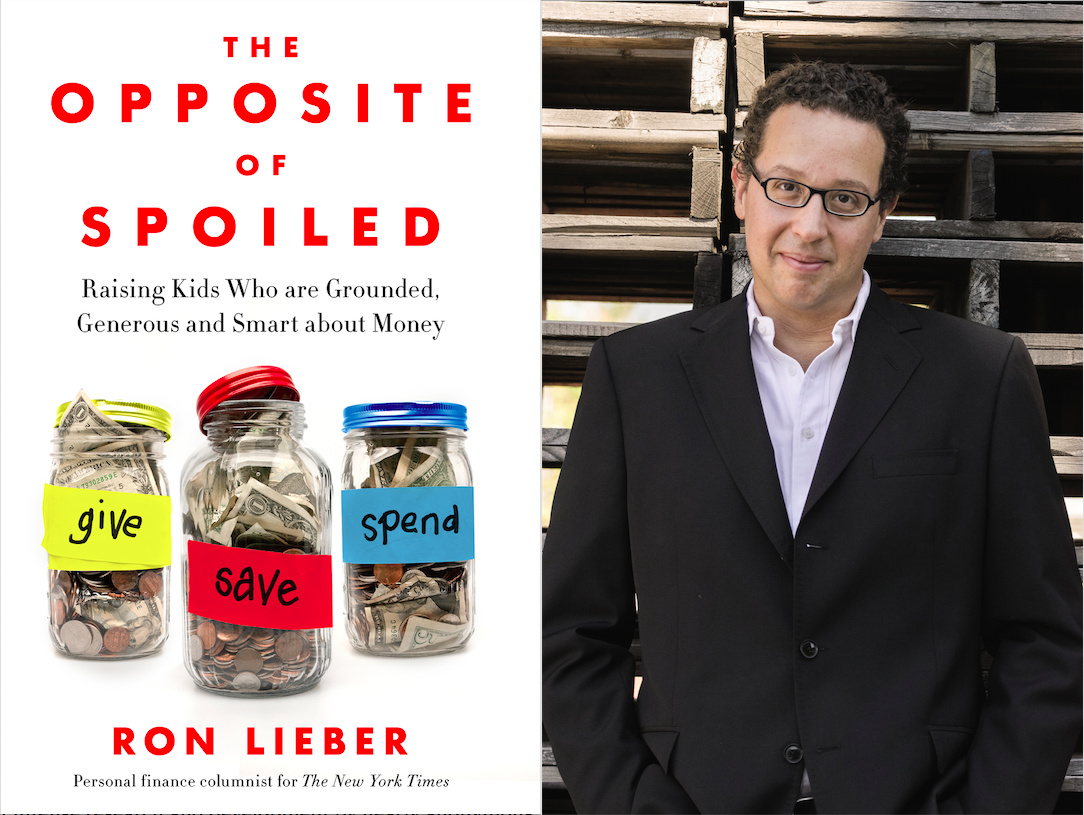
Lieber-book-and-headshot-2

Already when my daughter was three, I had to answer questions such as ‘Why don’t we have a slide in our house, mummy?’ (Considering she had three friends with indoor slides in their homes and we are a rather antisocial family, that seemed like a ridiculously high proportion of people with indoor slides, so it is unsurprising she asked that question. I clearly must have missed the ‘indoor slide’ trend that was happening 5 years ago). Then there were questions of ‘Why can’t I have a birthday party with a bouncy castle, a magician, pony rides, and princesses like so-and-so?’ http://www.nottinghillmummy.com/2014/06/05/kids-birthday-parties-these-days-nobu-or-the-dorchester-darling/ and ‘Why do I have to walk to school? My friend has Peter, the taxi driver.’

This is West London and no matter how hard we try to avoid it, the subject of money comes up regularly with our children. It may be a very taboo subject, but Ron Lieber, who writes a column, Your Money, for the New York Times, faces the issue straight on with his recently published book, ‘The Opposite of Spoiled: How to raise kids who are Grounded, Generous and Smart About Money,’ which has already shot up on the New York Times Bestseller’s List.

For many parents, the idea of your child being ‘spoiled’ is possibly the worst insult on you as a parent. Ron Lieber firstly describes that there are 4 ways of being spoiled:

1. ‘A spoiled child does not have any rules or regulations or behavioural standards, they’re more or less allowed to do as they please.’

2. ‘If a child breaks whatever rules and regulations that do exist in the household, there are no consequences for them or they are short-lived.’

3. ‘Lavishing time and attention on children in a way that is abnormal – so called helicopter parenting – also leads to children becoming spoiled.’

4. ‘It is only the fourth definition that we begin to talk about money. It’s possible to spoil kids by giving them lots of things and doing it in a way where they come to expect things, and feel entitled to them, and don’t express feelings of gratitude or graciousness about the things they have or the things they get to do.’

So if you have ever wondered how to handle the ‘money questions,’ here below are Ten Tips to help you navigate theses questions and teach your children about money, based on Ron Lieber’s book.

Ten Tips on How to teach children the value of money: 

1. Explain the difference between ‘Want’ versus ‘Need’

Although each family will have their own threshold, it is important to explain that there are things that we ‘need’ (food on the table, proper clothes, a house with a roof over our heads) versus our ‘wants’ (birthday presents, new Frozen doll or new Ninja Turtle).

2. Start an ‘allowance’ at the age of five or six

As soon as they are able to add and subtract, you can start giving them an allowance. For example, give them 50p for each year old they are. The idea is to give enough that they can buy something, save and manage their money. Parents should then not buy their children any other ‘wants’ apart from birthdays and christmas.

Ron Lieber although does not encourage linking money to chores. He feels that chores are things that need to be done regardless of whether a child is being paid or not. They should do it for free as a member of the household.

3. Split the allowance into three jars: Give, Save and Spend

‘Spend’ jar can be used for the odd impulse buy, the ‘Give’ jar teaches them to be generous and the ‘Save’ jar teaches about patience and delayed gratification.

4. Use money as a teaching tool:

Money can instil values such as curiosity, patience, thrift, modesty, generosity ad perseverance. It is also one way to show them what kind family you are: ‘a family that values education’ or a ‘family that values experiences over material things.’

5. Money is about Values

Teach your children to be grateful for what they have, to share it and to be generous with others and spend it wisely on the things that make you happiest. Teach them about priorities and a proper way to live.

6. Give your children control over their spending decisions

Around the ages of 10-12 is a good time to give them autonomy over spending, he says. ‘They’ll inevitably make mistakes or spend money on trinkets and regret it later when they don’t money for things they truly want, so letting them make mistakes – spectacular ones even – is a great way to go, because then they learn, and they’re not mistakes when they’re 24.’

7. Children should have a real job

This is a great way to teach children about work ethics, hard work and understand how much a pound can go (which these days is limited to the Pound Shop). The Americans are very good at encouraging their children to have part time jobs, and if it is less than 15 hours per week, it will foster essential skills that will be good for their future: they will have to report to a ‘boss,’ need to be responsible, show up on time, and do it happily.

8. Be open and talk about it when they ask you difficult questions about money

Kids get it. There job is to be curious. They are already sizing people up based on wealth, whether you like it or not. When they ask you difficult questions about money (ie. How much do you earn? Are we rich or poor?), respond by asking ‘Why do you ask?’ to determine why they are anxious or curious about it. Then, be transparent about where money comes from and where it goes; bills, mortgages, school fees, etc…

9. Teach kids delayed gratification

Teach them about delayed gratification by letting them save for something they really want over time. It is a key part of learning to handle money well. “Teaching our children the ability to wait is a big part of our overall goal, and what’s most important about allowance is what will happen when they’re too old to get one.”

10. Practice Gratitude 

Children have very seldom the chance to pause and reflect on what they have and count their blessings. Feeling fortunate is good for kids, so whether you say grace or teach them gratitude in your own way, it is important to show your children what you value. As Ron Lieber says, ‘If you want to feel rich, count all the things you have that money can’t buy.’

http://www.amazon.com/The-Opposite-Spoiled-Grounded-Generous-ebook/dp/B00KAC65PW


Let me know your thoughts about his book!

xx

NHYM

http://www.nottinghillyummymummy.com

@NHyummymummy

Standard
Family Life, Social Commentary

The Pushy Mummy Brigade: Only the Best Schools Will Do. Even at 4 years old.

article-2029867-072DE87B000005DC-30_468x319

Photo courtesy of the internet

In West London, where the motto of the pushy mummy brigade is ‘’Good is not Good enough, only Excellence will do,’ the quest for the perfect education is taken to extremes where only the fittest will survive. For many mothers, the choice of school at 4 years old is thought to determine the entire future of their children’s education, therefore is taken with the utmost seriousness and competitiveness. Friendships and pleasantries are put aside as mums compete for coveted spots at what are considered the ‘top schools’ in London. This causes an intense and fierce competition to gain entry into these schools that leaves some mums defeated by the system or anguished if their child still hasn’t been offered a ‘spot.’ There is now a collective social anxiety created by these mums, bordering on hysteria, which leads to all mothers feeling the pressure of getting their children in the right schools.

For the not-so-pushy-mothers, the question is do you join the ranks of the pushy mummy in order for your child to keep up with them, or do you stand up against the ideals of the Tiger Mother, which can rob childhoods away from children in order to push them in the ‘perfect school’ trajectory? But then how would you feel if your child was left behind as their children enter top schools and yours do not? Is this purely an obsession for anxiety filled mothers or is there any merit to this ultra competitiveness? When does it become more about the parents rather than the child and are we are really doing what is best for our children or are we missing out on what is really important? As a West London mother at the beginning of the school trajectory, I ask myself all of these questions and wonder what kind of parenting model I will subscribe to.

I was recently having dinner with a friend of mine, Sophie*, who was overly distressed because she hadn’t gotten her 3 year old son in what is considered the best pre-prep boys school in London, the infamous Wetherby School. Despite her husband hand delivering 6 applications at birth, he had only gotten into what is considered a ‘second tier’ school in the world of private, independent schools of West London. She had decided early on not to ‘play the game,’ which in West London parlance is being a pushy mum by pestering the registrar with phone calls, writing monthly letters and pulling in connections to call in a good word until you get a ‘spot.’.

It was as if she was describing that her son had only gotten into a ‘lesser’ Ivy League University, the equivalent of getting into Brown University instead of Harvard University which made me think: 1) but this is only pre-prep, he’s only 3 years old for god’s sake 2) all the private schools are very, very good, just be glad he’s gotten in somewhere 3) but finally concluded that she had been carried away by the social pressure that ‘only the best will do.’

I asked why the ‘second tier’ school wasn’t good enough, to which she responded ‘they hand out flyers, it can’t be that good if they are passing out flyers in the street’ and therefore could not be good enough for her son. I tried to re-assure her that his school was still a great school but even though she thought rationally that it was a good school, it was not the ‘best’ and wasn’t accepting the rejection very well. Like Groucho Marx once said, ‘I don’t ever want to belong to a club that I can get into.’

She finally admitted that the social pressure to get into the ‘right’ school had gotten to her and she was seemingly unable to be satisfied with the lesser school. She felt that this was a reflection of her as a mother: ‘I can’t even get him into the best school.’ I could see the little she-devil on her shoulder murmuring down at her as she opened the rejection letter. She had believed that she didn’t need to be a pushy mother to get her son into the ‘right’ school yet was devastated that she hadn’t gotten him in either. Instead of playing the game, she felt that she was the one who had been played, and was disturbed by how much she cared.

Not only that, but she hadn’t even been placed on the wait list, but received a flat rejection letter, while she saw other children born after son being put on the wait list for the small chance that they would get a spot. She described the headmistress of her nursery consoling her on not getting into Wetherby by telling her ‘Don’t worry, it’s for the best, you’re not really a ‘Wetherby Mum’ which could be interpreted in any number of ways but most likely meaning competitive, pushy, alpha mums that will do whatever it takes to get their precious son into the school. Still, there is some reverse snobbery in that comment that makes it all so uncomfortable for everyone involved.

Wetherby was first made world-famous by Princess Di dropping off little Prince William and Prince Harry at the doorsteps of this West London boys pre-prep school. Later, Claudia Schiffer, Elle McPherson and Stella McCartney all chose this school to educate their offspring, creating even more hype around this school and more recently the Beckhams. Even Britain’s favourite posh export, Hugh Grant, is an alumnus. Wetherby is generally considered the ‘gold standard’ where all mums would happily send their children and its new Prep school received the Best Prep School Award from Tatler’s School Guide a few years ago. As one mum says, ‘if you get offered a spot at Wetherby, you don’t think, you just take it.’

All mothers hope and want their children to be successful and since education is seen as one of the best predictors of success, it has turned us into a school-obsessed nation. West London mums take this obsession to another level, schooling being a constant subject of conversation, and when one meets another London mum, ‘How are you?’ could almost be replaced by ‘Where is he/she going to school?’ These West London mums are always a few steps ahead and have worked out the perfect educational trajectory for their children from birth to the end educational goal of Oxbridge or the Ivys for the Americans, which often rightfully, does predict a certain level of success. Take Hugh Grant as an example, he followed the trajectory of Wetherby, Upper Latymer and Oxford, which was an educational and financial success.

In this part of the world, there are only a few roads that lead to Oxbridge; Westminster School (52% go to Oxbridge) and St. Paul’s Boys school (60 Oxbridge offers last year) for the boys, and St. Paul’s Girls School (33% go to Oxbridge) and Wycombe Abbey (32% go to Oxbridge) for the girls. If you work it out backwards, for the boys school, Colet Court is the feeder school to St. Paul’s and Westminster Under is the feeder school to Westminster, and before that, Wetherby Pre-Prep is a great feeder school to both Colet Court and Westminster Under. For girls, Bute House is often quoted as the ‘golden ticket’ since one third of its pupils get places at St. Paul’s Girls School. Other prestigious 4yo+ girls schools include Pembridge Hall, Glendower, Falkner House and Kensington Prep, which are feeder schools for the top girls schools.

West London is an area that attracts overachieving, A type, competitive parents who procreate what they hope to be A-type, over-achieving offspring. This demographic is not your typical parent population, and to even have a chance of attending these schools, the game must be played. But these players are cutthroat, willing to do whatever it takes to win and their persistence is likely to be greater than yours. Like Gore Vidal once said, ‘It is not enough to succeed. Others must fail.’ There are clusters of these ‘top tier’ 4 + entry schools in London that these mums have an eye on, with a strong concentration of them in Notting Hill and South Kensington, which include schools mentioned above and others like Notting Hill Prep, Chepstow House, Norland Place and Thomas’. Most of the Notting Hill schools operate on a first come first serve basis, whereas many South Kensington schools also have an assessment at 3 years old, which are even more competitive.

To get into these 4+ entry schools, there are sets of rules that one must learn and adhere to early on, to ‘play the game.’ The rules are taught either by a school consultant for foreigners or by a friend with older children who have already passed this rite of passage. One mother I met in a pregnancy class boasted that she had paid a school consultant £500 just to tell her which schools were ‘appropriate’ schools and which would fit her and her family. Another mother called me in a panic when her daughter was 9 months old because she had ‘slacked off’ and still hadn’t gotten her daughter into a school, asking for advice, from what to do, to what wear and what questions to ask on the school tour. I told her to relax, look presentable and follow the rules.

For first-come-first-serve schools such as Wetherby and Pembridge Hall, applications must be dropped off the day of the child’s birth for the best chances of getting in, which with luck, may happen. Only two children per month are offered a place and two more are put on the waiting list. If that isn’t enough, letters must be written on a monthly basis, extolling the school’s virtues and calls must be made convincing the registrar of your utmost desire to get into this school. Meetings with the headmaster/headmistress consist of telling them that their school is the only school for their child and a few names of friends whose children are attending said school are dropped casually. Friends can call on your behalf. If all else fails, cakes, cookies and cards can be sent in on a monthly basis to assist the odds of climbing the waiting list. Some schools apparently write down each every contact made by the parent to express their interest in the school. Persistence pays off.

I was lucky enough to have been prepped by a few mothers before I gave birth to my first child and chose a school based on 3 criteria: its 5 minute proximity to our house, its adorable school uniforms that really made me melt and thirdly all of my friends in the neighbourhood were all sending their children to this school. These criteria were not based on any kind of research, spreadsheets or enlightened thought, but at 8 months pregnant with more hormones than sense, these seemed as good enough as any. I followed the strict protocol and guidelines and sent my husband 12 hours after my child’s birth, application in hand and flirtatious smiles on standby, to this school and one month later we were luckily offered a spot. I dread to think of the anxiety and anguish I would be faced with had I not undertaken these carefully planned and executed steps as prescribed by the ‘elder’ mothers.

My ‘dejected and rejected’ friend Sophie had also registered her son at birth, but didn’t follow through with the above rules when he didn’t receive an immediate spot, and therefore didn’t stand a chance. She described how she met a mum who immediately boasted that her son had gotten spots to 4 different schools including Wetherby. When Sophie explained that she had only gotten her son into a ‘safety school’ the mother said, ‘Don’t worry, spaces always open up. I still have my spots to all 4 schools.’ She had paid 4 different deposits to retain those places, but was already sure she would be sending him to Wetherby (of course). This would be costing her around £13,500 worth of deposits (4 x £3,500 of deposits), just to retain optionality if something were to go wrong (like what? the school moving to an undesirable post-code?).

Other mums I know have secured places in schools in Notting Hill for their girls, which are first-come-first-serve such as Notting Hill Prep, Chepstow House and Pembridge Hall, only to put their daughters through the assessments at schools in South Kensington like Glendower and Falkner House even though they live much further from these schools. These are considered some of the best girls schools but the assessments are extremely competitive and can be a large source of stress for girls and their parents, who spend hours ‘prepping’ them for the assessment but particularly for the ones who are rejected from the assessment schools or for those who have no backup options.

One of my friends Sarah* went through the excruciating assessment process for her daughter at Falkner House, and despite having attended the nursery attached to the school, failed to get into the school or any of the schools that did assessments. She described the day the offers came out; ‘within a few hours, everyone knew who had gotten in, who had been wait-listed and who had gotten rejected. It was catty and divisive. You didn’t know who had done what to get their child in. Parents pull out all the stops to get in, they wrote letters to the school, found ‘cheerleaders’ within the school to support their child. There were different levels of bribery, from baking cookies to offering holidays on their yachts or in their second home. Even siblings are not guaranteed a spot, and those siblings who do get spots are ‘monitored’ to ensure they keep the standards of the school.’

When her daughter still had no offers or wait-lists, she had to listen to other mothers self-obsessively tell her how difficult it was to choose between different school offers, not realising that she had none, causing unintentional hurt and more stress. Eventually, after 3 rejection letters, she finally received an offer from a non-selective school but for the remainder of the year, she still had to endure the questions of schooling and the implication that her daughter had not gotten into the ‘best’ girls school. She is now very happy with the current school her daughter attends but in retrospect calls it a ‘terrible process that I guess is needed for these over-subscribed schools.’ She tells me that if she had to do it over again, she would have avoided the whole process.

I am glad that I never succumbed to putting my daughters through the assessments at 3 years old. I wouldn’t have handled rejection very well or felt it fair for my daughter to be judged by an arbitrary assessment which likely means nothing about her future cognitive capabilities. Children grow at different speeds and one can only deduce so much from a 3 year olds communication and social skills. At some point, shouldn’t we let our children be children and leave the competition for later?

Speaking to an English mother who has been through the British system and is an Oxford alumnus, she is sending her child to a ‘first come first serve’ school. She says ‘not only because it is closer to where I live, but also because it has great results even though it is a non-selective school. Despite having children that may not have passed the assessment system, they are still achieving excellent results. You could extrapolate that the teaching there is particularly good, since the results of this school is equal or above some of the selective, assessment based entry schools.’

For those without school spots the year prior to entry, the anguish and anxiety of getting into a school becomes almost an obsession, where anything goes to get their children spots involving using school consultants, recurrent meetings with nursery headmistresses to help them get spots, and sending letters and calling schools at regular intervals to move up the waiting list. Not only are there acceptance letters and rejection letters, but there are waiting lists.

Waiting lists are bittersweet, since they give the impression of hope but without a guarantee. The only leverage of a waiting list is that a parent can climb up a waiting list by calls, cards, presents, donations and pleading whereas a flat rejection letter means that all hope is lost. A mother I know was determined to send her child to a certain school, having decided that it was the best school for her son, but despite having gone to the attached nursery, couldn’t get a guaranteed spot. After numerous calls to the school, she found out that her son was 95 down on the waiting list and at that point realised that they had to look at other options, but luckily she has a family connection to another school that she could use.

One of the headmistresses at a leading Notting Hill nursery recently explained that more and more people were moving to Notting Hill for the quality of schools and that they were more over-subscribed than ever. Ten years ago, she could get generally get places for her students into great 4+ entry schools, but not anymore. ‘It is more and more difficult to gain entry into these schools because of the sheer amount of children competing for the coveted spots. These schools used to cater to locals in Notting Hill, but now people are driving their children half way across London so that their child can attend one of these prestigious school or living in Queen’s Park, where they can buy a bigger house, but still sending their children to what are considered some of the top schools in London’.

School choice is also a delicate art in decision-making, which for some parents becomes a form of social snobbery and an indication of social status. School snobbery is based on where your child goes to school and the social assumptions that are made depending on the school. As mentioned, Wetherby is accepted as the best pre-prep boy’s school in London and therefore one of the best in the world some would argue, but still as I mentioned before, there is a social term for ‘Wetherby Mums.’ Every school falls victim to some kind of derision and criticism at some point or other.

One school is considered the ‘airy fairy school for the artsy types without homework or testing’, but ‘forget getting into a proper school after.’ Another fairly new school in a less desirable location was described by a mother ‘where the rejects from Pembridge and Wetherby go to.’

My daughters’ school is known for being ‘blingtastic’ with mothers thinking they are at a ‘fashion show’, and has at the same time been called too competitive by one parent and not competitive enough by another, described as a school ‘for girls who learn how to sew.’ Then there is blatant snobbery I have overheard about a school: ‘Have you seen the parents there? They are not my type of people.’ These are all excellent schools yet these parents can’t help but judge them. It is as if we are back in the playground, but without a headmaster to keep us in line.

It is difficult not to be affected by the general chatter and comments about where our children go to school because school choice is important. As mothers, we want the best for our children. We don’t want our children to be bullied, we want them to be happy, well adjusted but we also want to give them the best opportunities we can give them. Malcolm Gladwell showed in his book ‘Outliers,’ that middle class parenting which encourages extra tutors and extra-curricular activities produces more successful children than lower class parenting which didn’t. He also showed that educational opportunities do help with success, just as Bill Gates had exceptional opportunities in his high school driven by involved mothers. The reality is that certain schools open doors and opportunities, so it easy to buy into the ‘perfect educational trajectory’. https://nottinghillmummy.com/2014/08/29/everything-you-need-to-know-about-your-childs-education-success-by-malcolm-gladwell/

And early education has been proven time and time again to have a strong impact on our children’s future, as evidenced by numerous research papers and renowned academics such as James Heckman, a Nobel Laureate Professor researching the advantages of quality early education on future success. But when we are dealing with private schools in the UK, shouldn’t we be satisfied with any of them, which generally provide world-class education for 4 years old? Isn’t all a bit ridiculous?

Pushy mums, alpha mums, and tiger mums, whose numbers are much higher than average in London, set a precedent. They set a standard of tutoring, sports activities, Kumon lessons and music, and it creates pressure to keep up with these standards. What makes it hard to ignore, is that these children will have an advantage when applying to schools and universities. Our children have to compete with these alpha children who have a tutored advantage over ours and as much as we’d like to think our children to be naturally brilliant, the fact is that practice makes perfect, and the hours of extra help does make a difference. So do we join them to create an equal battleground, or do we stay strong and believe in our children, yet face the reality that our children may not get into the ‘top’ schools? The son of one of my friends who didn’t get into a ‘top’ prep school after the 7+ exams because he wasn’t tutored was left wondering why all his friends got in and he didn’t, which undermined his confidence.

I am not sure whether to praise the pushy parents who are advocates for their children and their ‘go-getter’ attitude or question whether this is creating too much competition and feel sorry for their children who will bear the weight of their mother’s intensity. In one respect, they are opening doors and opportunities for their children, but at the same time forcing others to join in on the competition, fuelling mostly unnecessary anxiety while placing unrealistic pressure on their children to succeed.

Tanith Carey, an ex-tiger mother, details her evolution from pushy- mummy to more-relaxed-mummy in her book Taming the Tiger Parent: How to Put Your Child’s Wellbeing First in a Competitive World, giving advice on how to provide a more nurturing home for happier and healthier children. Having been a Tiger Mum and having failed at it, she truly believes are children are better off in a less competitive environment. http://www.amazon.co.uk/Taming-Tiger-Parent-Tanith-Carey-ebook/dp/B00M0T03TC

It is can be easy to lose sight of what is important for our individual child when we are influenced by this greater social consciousness and conversation. It would be easy to dismiss it, but as a parent, who wouldn’t want to send their child to the ‘best’ school possible and give them the ‘best’ opportunities possible? But sometimes we have to be reminded that being at the ‘best’ school may not always be the right decision for the individual child and that competition is not always positive for our children.

One wise mother I know once told me, ‘I would rather my son was the top of his class in a lesser school than the last in the most competitive school. His confidence will grow much more in an environment where he is among the best than in an environment where he is among the worst.’ The parents’ attitude towards success and failure is also an important contributor towards a child’s overall success. Most child psychologists stress that failure is just as important as success to build character and emotional resilience, therefore opportunities for learning and growing are just as important in times of success as they are in times of failure.

At no other time in our lives do we feel more judged than when we become mothers, whether we decide by choice or not by choice, to breastfeed or not, whether we are ‘too posh to push’, or where we decide to send our children. All of sudden, motherhood is an open door for all to comment on. It is difficult not to think that these decisions are reflections of you as a parent, because in some ways they are. Our children are being shaped and encouraged by all those around them, including schools and their peers. These are questions many mothers today face on a daily basis, from our microcosm of West London, to middle class England, but I believe that we ultimately have the same goal in mind when we stop listening to the chatter; happiness for our children.

Perhaps we should take a step back and take a deep breath, relax and realise that the most important thing is our children’s wellbeing. Perhaps we should just let them be children and let them play, jump in muddy puddles, let them run freely in a garden and climb trees and forget about the stringent activities of ballet/tennis/swimming/music/2nd language/football on top of reading/writing/maths tutoring. And then, we can start being kinder to each other and to our children, since motherhood is already hard enough as it is. All we can do is the best we can, and that should be good enough. And let’s face it, most of us are just winging it after all.

xx

NHYM

http://www.nottinghillyummymummy.com

@NHyummymummy

Let me know your thoughts and comments on competitive mothering!

Standard
Family Life, Social Commentary

Everything You Need to Know About Your Child’s Education & Success by Malcolm Gladwell

For those of you who have already read Malcolm Gladwell’s ‘Outliers’, then you already know everything you need to know about your child’s education and future success. If you haven’t, this is a snap picture of what he has found out about the patterns and behaviours of ‘Outliers,’ people out of the norm based on intelligence, success and physical prowess, based on extensive research and some lateral thinking.

1. Being the oldest in the class is a Good Thing.

A study done by two economists found that an older child who was tested against a younger child in the same class with comparable intellect would score higher than the younger child, which can make a huge difference in getting into gifted programs. Therefore, the oldest child will be put in an ‘advanced program’ which  will in turn encourage his/her skills and they will do better than the younger child. Over time, these differences will become big differences which will have a big impact. He uses the example of Junior League Hockey in Canada and the physical superiority January children have over later born children to illustrate that a whole year matters and when you are born matters. (Many NHYMs I know already have the birthdate of their child planned before pregnancy so they are well ahead of me; https://nottinghillmummy.com/2014/07/24/notting-hill-nurseries-the-rise-of-the-notting-hill-yummy-mummy/).

2. Hard Work and the 10,000 hour rule.

Most of us have heard of the 10,000 rule already, but it re-enforces that hard work will get you ahead. The best chess players and the best musical prodigies are the ones who put in more time in their art than anyone else. Gladwell looked at a study that showed that once a musician has the talent to get into a top music school, what distinguished the world famous musician versus the rest is the amount of time dedicated to his music. Studies done all show that 10,000 hours of practice are needed to achieve ‘expert’ level at any one complex task, which equates to years of hard work. It takes this amount of time for the brain to process and assimilate expertise and mastery. I clearly remember a friend who was an All American sports player whose parents told me that he would spend hours kicking his ball, all day and every day, which is how he became so good. So get practicing.

3. Opportunity.

Gladwell uses the example of Bill Gates who as a teenager was lucky enough to have a computer in his high school in the 60s. This was considered ‘amazing.’ Most universities didn’t have computers yet, so here he was given an opportunity to play with computers and start programming before any of his peers were able to. This was his opportunity, which enabled him to get ahead of the rest of the world. It was his obsession and he used the 10,000 hour rule to become a world expert. Gladwell states that all outliers benefit from some kind of extraordinary opportunity. So, this is what you can give your children: opportunities. Then it is up to them to take these opportunities or not.

4. Oxbridge and the Ivy Leagues are not the answer to everything.

I hear all around me mothers who are obsessed with their children going to Oxbridge or an Ivy League University. To them, this is their definition of educational success. Yes, the Ivys and Oxbridge open a lot of doors, but they are not going to predict where your child will end up in life. Bill Gates dropped out of Harvard, he clearly did not need a university degree to succeed. To most, universities will help them succeed, but a good university is good enough. Gladwell takes the last 25 Americans to win the Nobel Prize in Chemistry and in Medicine and many did not go to the ‘best’ universities, but to ‘good enough’ universities. Many I had never even heard of. The argument is that you would rather have your child at the top of his class at a ‘good’ university, rather than bottom of the class at ‘Oxbridge/Ivy.’ Similarly to point one, the person at the ‘lesser’ university may get more opportunities.

5. Luck Matters.

Being at the right place at the right time is something we can’t predict. Some opportunities are based on luck. Nothing else. And there is nothing you can do about that apart from teaching your child about Good Karma.

6. A Genius IQ won’t guarantee anything. 

Studies have shown that an IQ of 115 is necessary to get into a competitive graduate program and to succeed at it. This is probably what most of my peers are hoping for their children. But much above this IQ won’t guarantee very much. An IQ above 120 doesn’t correlate with personal success. It shows that intelligence has a threshold. For example, a scientist with an IQ of 130 is just as likely to win a Nobel Prize as one with an IQ of 180. It is like the Money and Happiness threshold. After a certain threshold, the amount of money you have does not have an impact on your happiness. Success is more than just to do with IQ, it also requires a lot of ‘Practical Intelligence.’ Practical Intelligence can be described as ‘knowing what to say to who, knowing when to say it, and knowing how to say it with maximum impact.’

7. What you do as a parent has an impact. 

Practical intelligence has a lot to do with what kind of family you were raised in. A study looking at different kinds of families found that two sets of parenting ‘philosophies’ emerged, which were separated by class lines; the wealthy families and the poorer families. Middle class and wealthier parents talked things through and taught their children how to reason. They allowed their children to challenge them, negotiate with them, and question them. They called the middle class style of parenting as ‘concerted cultivation’ which actively ‘fosters and assess a child’s talents, opinions and skills.’ Lower class parents let their children develop on their own, and had less involvement in their schooling and extra-curricular activities. (Of course over-parenting, as I’ve mentioned before, can turn your child into a stress and anxiety ridden child, which is not a good thing either! https://nottinghillmummy.com/2014/06/26/quote-of-the-day-but-mummy-only-daddies-work/)

8. Supportive Parents Lead their Children. 

What you do and what environment you provide your child affects everything she/he will do in the future. I remember growing up and seeing my father surrounded by books and encyclopedias. This taught me that books were interesting and how to be curious. My mother listened to classical music and painted. Even though back then, these were not my chosen subjects or tastes, they were indelibly inscribed in my brain, and I have come to love books, Wikipedia, Tschostakovich, and Art. Middle and upper middle class children’s homes are filled with books, their parents have college educations, they present themselves well and dress appropriately. This is teaching your child practical intelligence; how to interact appropriately with the real world. How to assess and address problems, how to speak up when necessary, and how to learn to manage other people appropriately.

9. Be Aware of Your Cultural Background. 

This comes nicely to the next point that culture matters. Your cultural background matters. Gladwell looked at Airplane accidents from a Korean airline and found that 1st Officers wouldn’t assert themselves against their Captains, which caused a number of airplane crashes. (It did however show that American culture is an affirmative one, as many flight officers would be intimidated by the JFK air controllers. New York is one of the most affirmative cities in the world in my opinion). I have already opined about Jews and their cultural impact in another post and we have all heard about ‘Tiger Moms’ of American Chinese descent, so think about your culture’s pros and cons and address them if possible when raising your child.

10. Perseverance Counts. 

This theme is weaved throughout the book, ‘Outliers.’ Working hard, and working at what you do takes time and perseverance to succeed. It is about using failures as a lesson towards success. Entrepreneurs’s personality traits always include ‘perseverance.’ It is a ‘constant personal evolution (Huffington Post).’ Learning to fail is just as important as succeeding. So whatever your child puts their mind to, be there to support them and let them fail along the way.

xx

NHYM

http://www.nottinghillyummymummy.com

@NHyummymummy

Standard
Family Life, Social Commentary

Notting Hill Nurseries & The Rise of the Notting Hill Yummy Mummy

Baby chic

I was first introduced to the world of Notting Hill Yummy Mummies 10 years ago when I was still in the world of Little Miss Notting Hill (www.littlemissnottinghill.com), brunching at the old Electric, Sunday afternoons at the Westbourne, and late nights at Montgomery Place, blissfully unaware of the darker side of Notting Hill. I met ‘Francesca’ through an ex-P.E. boyfriend, who ended up being instrumental in my rise to being a Notting Hill Yummy Mummy. She taught me everything there is to know about motherhood: ‘1. Get Mr. Teoh on the phone as soon as you are pregnant and book your suite at the Portland Hotel & Spa (for those of you who don’t know, it really is a hospital, but their concierge/bellhop is very good, breakfast is 5 star, and request the Dutch Bowen therapist, she is lovely) 2. The day he/she is born, send the sperm-donor to the gates of ‘that’ school with the to-die-for school uniforms (Wetherby/Pembridge Hall), application in hand and stop by ‘the’ nursery on the same day (one of the ‘famous five’). 3. Discipline, Persistence, Perseverance and Consistency (I wasn’t sure if she meant that for me or for my children, but it worked for both). That’s all you need to know about parenting,’ she assured me. I followed all of her advice and here I am today, a Notting Hill Yummy Mummy.

Only after the fact did I realise how much time and money Francesca saved me. I avoided hours of research, headaches wondering which nursery to send M to, visiting all the below nurseries, or paying a ‘school consultant’ hundreds of pounds to research the nurseries before doing all of it again myself . I once almost veered off track and asked about a Bilingual nursery, but my Alpha mum friend told me ‘Don’t do it. Your child will be put in the Z class at Pembridge/Wetherby and that’s the end of it. You can forget about Oxbridge.’ ‘What’s the Z class?’ I asked wide-eyed, innocent and ignorant. ‘It’s for the slow kids that the teachers ignore.’ After that, I thought it best to take Francesca’s advice, and do what I was told.
The first day of nursery, nervous, scouring for new friends, wearing a new outfit, and some crying involved, I felt 7 again on the first day of school, while my child was happily playing with the toy kitchen. (Thankfully, I wasn’t aware that some parents were googling each other, otherwise I would have really lost it) but all has turned out just fine. Here’s my piece of advice for new mums choosing a nursery: stop giving yourselves headaches, women! They are all great nurseries! Which is why everyone bribes and steals to get in, but each has its own personality, which is what I will focus on below. Once in, you just need to stay away from the competitive Alpha and Tiger mums, be polite to the billionaires (you never know when you’ll be needing their private jet) and somewhere in there, in every nursery, you will find clever, interesting, genuine parents that you may become friends with. Just make sure you send in an application as soon as your child is born. That is imperative. If not, send them cards and photos of your child each month, cookies may help, or pretend that you’ve just moved to London, cry a little, and they will take pity on you (There are always spaces once offers are declined. This strategy works well at Acorn).
So here I am paying it back by spreading Francesca’s wisdom and giving you the ‘real’ low-down on the ‘Famous Five’ Notting Hill Nurseries. For Free.

‘FAMOUS FIVE’ NOTTING HILL NURSERIES

‘A is for… A-List ACORN NURSERY’
Best for: Rock ‘n’ Roll Royalty and the Kool Kids
McCartney and Jagger are common last names at this nursery. A-List Hollywood actors send their kids here when they are filming their latest flick in London. Film directors, news presenters and politicians all send their kids here. You have to be ready to mingle with the fash-pack, as you will have to compete with shoe designers, who probably design their children’s own shoes, and a famous fashion designer with rock royalty genes whose latest very cute, kids see-through waterproof raincoat will put your child’s Gap raincoat to shame. But not all fashion designers are welcome. One famous A-list fashion designer (one half of an A-list ‘Golden’ couple) was rumoured not to have gotten a place because when she visited she wore big, oversized sunglasses and never smiled (I wouldn’t smile either if I only are one green apple a day). Madonna apparently was rejected and Richard Curtis may have based the Christmas Play in his film ‘Love Actually’ on this nursery’s Christmas play. There are ‘Daddy mornings’ which involve daddies coming for a coffee morning to encourage daddy and child bonding (which really just highlights the fact that these daddies need their assistants to schedule me-and-child-time in their busy work schedules). A whole article in the Telegraph was written about this nursery in 2004 which will give you a flavour of this nursery, but also of all the nurseries in the area: http://www.telegraph.co.uk/news/uknews/1459538/The-only-education-you-need-is-Acorn-and-Oxford.html.
Ofsted rating: Good (2011). http://www.ofsted.gov.uk/inspection-reports/find-inspection-report/provider/CARE/105673

‘M is for… Mini Royals at the MINORS NURSERY’
Best for: English Royalty and Wannabe English Royalty
This nursery was made famous by Lady Di dropping off her precious princes William and Harry at Minors Nursery in the eighties. The nursery is rather on the small side with little outdoor space and the toys are so pristine and clean, they look like they’ve never been used. The parents say that this nursery is ‘all about the children’ so there is less parent-competition around once you are in (the competition remains behind closed doors during the application process here). There is a new headmistress who started a few years ago, whom some parents feel is rather cold and on the snobby side, especially when she explains that Minors stands out for ‘not being a nursery in a dirty church hall’ (what’s wrong with a dirty church hall? They probably had more fun there and that’s probably where most of these mums went to nursery). One parent given the tour of the nursery felt that the children seemed a bit snotty (not the cold-virus-nose-snotty kind but the spoiled-brat kind) and the girls were all in expensive princess dresses (not the Disney kind, more the Melissa Wyndham kind), which scared them off.
Ofsted report: Outstanding (2011). http://www.ofsted.gov.uk/inspection-reports/find-inspection-report/provider/CARE/EY295790

‘S is for… Sexy Dads and Stepford wives at STRAWBERRY FIELDS’
Best for: The PTA mum and hot-daddy-watching/drooling
Strawberry fields earned its reputation some years ago as having the best-looking-dad-of-all-nursery-dads. ‘He just walked by…’ one mum would say, without even mentioning his name, and all the other mums will sigh in unison. This was one good enough reason to send your kids here, but I will try to remain unbiased and will fill another whole post on the virtues on this very famous ex-football player as the ‘World’s Best Dad’ another time (who by the way does the drop off and pick up more than any other dad, takes his daughter to Granger for lunch after nursery, and then drops her off to playdates and BabyBop). As one woman manning a booth at the Christmas fair was overheard saying ‘Every woman should have an accessory like that.’ But it’s the mummies to be afraid of at this nursery. There are some who send their nannies to stand in line for them at the Christmas play and then use their twiglet, sharpened elbows to bulldozer through the line 10 minutes before the start to ensure front row seats. Then there are the panic-attack-inducing mums who organise the Christmas fair (the Christmas Fair deserves another blog to itself). Apart from those details, the nursery itself is wonderful, the staff is strict but loving, the children are adorable, the nursery feels spacious and welcoming, having the use of the large adjacent church hall for physical education, christmas plays, easter hat parades and farm animal visits. Having said all that, the parents are extremely involved, if that is your thing, and there are parents’ nights out at the Lonsdale, lunches at Osteria, and Pub Quizzes all organised by the Class and School Representatives and there are some lovely international parents to have coffee with at Kitchen & Pantry before or after pick up and drop off.
Ofsted: Outstanding (2013). http://www.ofsted.gov.uk/inspection-reports/find-inspection-report/provider/CARE/EY456623

‘R is for… Respite or Rejects? at ROLFE’S’
Best for: Those who are just afraid of all of the above. This nursery is part of the Alpha Plus Group, which has Pembridge Hall, Wetherby and Minors in its roster, so comes from a very good pedigree. Rolfe’s is the opposite of the Minors, with children running around in the big open area on the ground floor, playing with sand, and getting their hands dirty in the outdoor space. It all seemed like good fun. It is still very good, the parents love it and the new nursery premise is brand new, but for some the space has lost its charm and coziness of the Ken Park Road space, where it used to be. Some of the mums choose Rolfe’s in hope that they are shielding their children from the Alpha mums and Bling from the other nurseries, but they can’t escape. There are still chauffeur-driven children being dropped off, mums who give Harrod’s presents to the teachers at Christmas and mums asking other mums ‘So, are you teaching your child Mandarin yet?’
Ofsted: Good (2013). http://www.ofsted.gov.uk/inspection-reports/find-inspection-report/provider/CARE/EY448774

‘L is for… La La Land at LADBROKE SQUARE MONTESSORI’
Best for: The Anti-Bling Notting Hill Hippy Chick
For the remaining Hippy Chicks who live in Notting Hill and decidedly want to stay away from the Hedge Fund/Banker/Bling crowd (although don’t be duped, there are still children living in £13 million mansions backing onto communal gardens), most opt for Ladbroke Square Montessori. There is less competition, so it is easier to get in and is described as a ‘warm and happy place.’ It is not known for its hard discipline, but more for its carefree approach, unlike some of the other nurseries above mentioned. When touring the nursery, one parent asked: ‘How do you discipline a child if one child hits another child?’ ‘We ask the child to apologise to the other child.’ ‘What if they don’t want to apologise?’ ‘We encourage them to say sorry but if they don’t want to say sorry, we don’t make them.’ So, if you’re OK with that, I am sure your child will love this nursery.
Ofsted: Outstanding (2011). http://www.ofsted.gov.uk/inspection-reports/find-inspection-report/provider/CARE/105707

xx

NHYM

http://www.nottinghillyummymummy.com

twitter: @NHyummymummy

p.s. Check out my mention in this Saturday Times Magazine 30/8/14 in the articles on London Nurseries & Schools!!! xx

Standard
Family Life, Social Commentary

Quote of the Day: ‘But mummy, only daddies work!’

…M’s response to my telling her that I am going back to work.

The Challenges of the Career Supermom, the Part-time Mumpreneur and the SAHM (Stay-at-Home-Mum)

images-1

I once had the potential to be what most people would call a ‘high flyer.’ I entered one of the finest graduate programmes in the country, acquired multiple letters past by name, got a number of degrees under my belt, wrote articles as an ‘expert’, until, that is, I had children. Then my perception of what was important and where I was going in my career was overtaken by how much my baby had slept/drank/cried/pooped/peed, and I forgot how to spell my own name. I went back to work after a year but was torn between the guilt when I was working, and being brain-dead when I was singing ‘Gymbo the clown goes up and down’ for the 100th time.

Eventually, the guilt, stress and pure exhaustion won out and I stopped working completely to see where things would take me, despite my husband’s fear that this meant a withering bank account (which by the way he now agrees was completely unfounded). The Sunday Times Style Magazine last week quoted that Generation X are ‘those aged 30-49, who are likely to be in the thick of child-rearing or taking care of elderly relative, are the most likely (48%) to say that work eats into family time. This is the most time-squeezed, stressed group of all, and huge numbers of that generation’s high flyers dropped out to raise their children.’ A few years on, I am still trying to figure out the right balance, between my children’s needs (being with them 100% and becoming a neurotic helicopter parent), and my needs (needing actual adult conversation, whose main subject of conversation doesn’t revolve around sleep training or school admissions).

For X number of years, parenthood takes over and no matter how hard you may fight it, this time inevitably has to be dedicated to your children and their needs, until they go away, some earlier than others to boarding school, and then to University. But then, those parents who spent all their time helicoptering are left all alone wondering where did all this time go and feeling the empty nest syndrome. The others, after being overwhelmed, stressed and exhausted trying to manage a full time career and full time parenthood, may end up feeling regret at 60 for not spending enough time with their children when they were young. Currently, all the mothers I know are trying to balance, juggle, and manage being a mother while continuing to develop their own ‘self.’

 What Kind of Mother Are You?! The Career Supermom, the Part-time Mumpreneur, or the SAHM (Stay-At-Home-Mum)

images-2

The Career Supermom: 

As it turns out, all the research shows that the career supermom is happier than the full time Stay-At-Home-Mom (of course, this research doesn’t consider the Notting Hill SAHM who have full time nannies). (http://www.huffingtonpost.com/2011/12/15/study-working-moms-are-ha_n_1152202.html) Career supermoms are valued in society, which values women like Nathalie Massanet, Sheryl Sandberg and Hillary Clinton who managed to be working mothers who have excelled in their industry. Full time working mums say they enjoy work because they are intellectually satisfied, earn great money and enjoy the social aspect of work. Of course, the career supermom will always have the risk that their children call the nanny ‘mummy’ (which has happened more times than I wish to explain), and they will have to manage their guilt when they miss their child’s first steps and have to explain to their child why they were the only parent who wasn’t at the school christmas play.

roajkvtfokwe9nbz25zmfw

But apparently, for the working supermoms, the guilt is not strong enough for them not to work, as it was found that the majority of women do not feel guilty about being at work instead of at home. Many super-high-fliers I know, are much happier being at work than at home, but they are also happy to sacrifice the time with their children, knowing that their children are safe and happy with their nannies/daycare. Sheryl Sandberg discusses her rise to power managing motherhood and career by ‘moulding’ her hours to fit these two roles but she emphasises that she had to make a lot of sacrifices. She admits to not having it all, and to feeling like a lousy mother a lot of the time (http://www.mckinsey.com/insights/organization/facebooks_sheryl_sandberg_no_one_can_have_it_all). Sue Palmer, an advocate on literacy, says that these educated, career women find it easier to control their work than their kids, therefore feel happier at work than at home, although biologically, women were meant to bear and raise children. (http://www.mothersathomematter.co.uk/mahm-blog/447-what-makes-a-happy-mum)

From a child development point of view, she describes children’s needs:

*In the first couple of years babies and toddlers need ‘constant, consistent, one-on-one, loving care’ from a primary attachment figure. Doesn’t have to be mum. As time goes on, the care can be shared with other loving attachment figures, e.g. dad.
*Between ages two and three is a grey area – it probably depends on the individual child.
*From around three, children benefit from being with other children for a few hours a day, so a half-day at nursery is probably a good thing.
*The older children get, the more they need to move beyond the family so they’re probably ready for a full school day from around 6/7.
*BUT throughout childhood, they still need loving care around the edges of the school day – time with their family, as well as time with a trusted adult ready to hand while they play.

The one thing I can’t get my head around is that not only do these supercareer moms work 70+ hour weeks, but when they come home, they often are still in charge of the household/cooking/childcare etc… even having equal or greater pay than their husbands. This is where women have failed in their fight for women’s lib. These women end up with the work, the house and the children to look after. Most men have not taken their half of the house-work equal to how much women now work. Of course, to the few women who have these perfect husbands who work and take care of the house, consider yourselves very lucky.

The Part-Time ‘Mumpreneur’

images-7

Part-time working mums are meant to be the happiest since they manage to spend time with their children, as well as stay in the working community. But unfortunately, this doesn’t always work out, as eventually those mums feel torn in both directions; when at work they think about home, and when at home think about work. Working part-time mums, consider themselves ‘involved moms and talented employees.’ They enjoy the social aspects of work, being challenged and fulfilled on the job, and the increased financial stability (which translates into balancing the power in the relationship between husband and wife). They are although, probably the most stressed out of the three groups because they have the whole domestic responsibility as well as the job responsibility, therefore pressure coming from all angles. The career woman can leave the majority of child-rearing to the nanny, and the SAHM can leave the money-making to their husbands.

As mentioned in my last post, mumpreneurs are the new, hot, trend among NHYMs. I was having a conversation with an above career supermom; fund manager, part-time internationally renowned artist, mother of two, LSE graduate, loving wife, about mumpreneurs, when she condescendingly snubbed the term ‘mumpreneur’ telling me it was really just a hobby for these women. But when I asked her when did a hobby becomes a business, she replied that ‘Anything that makes money is a business,’ so all of the mumpreneurs I know, genuinely do make money, therefore are businesses (even if they are in a privileged position of not having to contribute to the mortgage payments, but we are in Notting Hill after all).

??????????????????????????????????????????????????????????????????????

Mumpreneurs set out to make money, whether in designing clothes or jewellery, creating a food business, or becoming yoga gurus. It takes guts to set out any company on your own, with the looming reality that you may fail and that everyone you know will be talking about it. You invest your money, you create a website, you hire a tax account or do your own taxes, you learn to understand marketing and advertising, you manage your inflow and outflow of costs and revenue, and all these things that some of these women may never have done before. They become marketers, advertisers, accountants, graphic designers, web designers, business managers and the cleaner, all rolled into one. If anything, it will give them knowledge for the next business they try to set up. I admire these women for doing it, and yes, most of them will fail. Actually, 82% will fail, since only 18% of any entrepreneur will succeed, in any business.

Many of these women will have worked in a corporate environment before deciding to go at it on their own, and will use their past skills to start their own company. As a strong supporter of small businesses, innovation, and entrepreneurial spirit, I admire and salute all these women, trying to juggle being there for their children, while creating a business or company. Annabel Karmel started like this, Ella’s Kitchen as well. They inject money into the economy, they are useful to society, they learn or hone new skills for the future, they stay interested and current in their industry, and they strive to be a part of working society.

Notting Hill Mumpreneurs

images-6

A number of superwomen, beautiful, creative mumpreneurs have approached me since the beginning of the blog, promoting their passion to me, and as a woman/mother/entrepreneur supporter, I wanted to share some ‘mumpreneurs,’ (some who have approached me, some I have heard through the NH grapevine) who have taken the courageous plunge into entrepreneurship doing what they are passionate about, often from a completely different career background.

Food and Beverage: Ex-model and LSE grad, Bodil Blaine is starting a war with Nespresso, making ethical coffee at CRU Kafe teaming up with an established Canadian Entrepreneur (http://crukafe.co.uk). Chika Russell is importing West African treats the UK, which have already been picked up by 5* hotels, and will soon be found in a number of high end department stores. (http://www.chikas.co.uk), Kara Rosen Diamond uses her marketing expertise by bringing cold pressed, organic juices from the US to the UK with Plenish Cleanse, which has already been featured in many magazines, including the Sunday Times Style Magazine (http://www.plenishcleanse.com/shop/).

Health and Fitness: Ex-Banker turned pilates and facial fitness guru, Carme Farre, gives you a six pack, a Kim Kardashian bum, and a wrinkle free face without any surgery (http://studiocarme.co.uk). Leslie Saglio, an ex-real estate expert brings Serene Social to the UK, ‘an international wellness, philanthropy and conscious networking community for women,’ organising rooftop yoga (http://serenesocial.com/events/serene-london-rise-up-weekly-rooftop-yoga-series), and on top of that she teaches kids and yin yoga in West London (http://www.lesliesaglio.com).

Design and Style: Ex-De Beers/Cartier artistic director, Raphaele Canot brings her creative expertise to her ‘timeless and beautiful’ art deco jewellery line (http://raphaelecanot.com). Alex Al Badar, an ex-model, has turned herself into fashion designer and collaborates with her sister who hand paints individual breezy and bright designs at Soler (http://www.soler.co.uk). Rachel Verghis has started a company called gooeyskins, http://www.gooeyskinshq.com, which designs cool and iconic cases for iPads, iPhones, and other gadgets.

Children: Two ex-lawyer mums, Caroline and Pinja have brought Scandinavian and Dutch children’s clothes, furniture and toys to the UK with their website http://www.fourfairiesandaprince.com. Marina Fogle and Dr. Chiara Hunt, Kate Middleton friends and entrepreneurial ex-party planners, recently started an NCT competitor class called the Bump, which doesn’t force breastfeeding for four years or advocate births without intervention, even when necessary (http://www.thebumpclass.com). And finally, watch out for Gudrun Wurm’ s organic baby body products this August at http://www.littlebutterflyorganic.com

The SAHM: Stay-At-Home-Mum

frabz-Stay-at-home-mom-What-my-friends-think-I-do-What-my-mom-thinks-I-d04598

The Stay-At-Home-Mum is considered be the unhappiest of the lot, with the most depressive illness and mental health issues as seen in the study mentioned before because of loneliness and feeling that society doesn’t value them as much as a working mother. Of course, this doesn’t apply to most Notting Hill SAHM, as they have the luxury to hire nannies and focus on their needs any time they want (There should be a study on SAHM with help and their life satisfaction).

Being a SAHM makes you financial dependent on your husband (usually, unless you have your own trust fund to rely on), and unfortunately gives him power in the relationship. He works hard, therefore you are responsible for everything else outside the scope of work; keeping the house immaculate and clean, raising the children, having – the right- food prepared on the table at night, arranging school and playdates, grocery shopping, present buying, looking good for his work events and the list goes on. Some women feel guilty about their husbands working hard all week and feel indebted to them, while husbands resent their wives for having a ‘lady of leisure’ lifestyle. My mother was a typical SAHM who told me from a very young and tender age to go out there and have a career, have a job and be financially independent. This was the generation who pushed women’s lib and forced society to accept women as equal workers to men. Unfortunately, this has also brought on increased divorce rates through women’s independence, women marrying later and having more miscarriages and ivf babies than ever before.

stay-at-home-mom-does

Spending all day long with your children, and even meeting other similar like minded women can be fun and somewhat appealing for a certain amount of time, but two problems arise, one is helicopter parenting since these women’s sole focus of their attention are their children, which creates a needy, anxious and dependent child with poor coping skills (http://www.psychologytoday.com/blog/nation-wimps/201401/helicopter-parenting-its-worse-you-think), and secondly, what about the longer term. In only a few years, their children will leave their home to go to school full time and then off they go to university and the empty nest syndrome will hit. What will they do then? It will be much harder to get back into the working world if they stopped working early on, and when their children are at university, what will they do to to keep their minds sharp and focussed? Having a ‘hobby’ or business will do that, whether or not actual money is actually exchanged or produced.

The Bottom Line:

In the end, no one has the perfect formula to being a happy mother, woman and worker. These are just a few questions to ask yourselves to determine what will make you the happiest and most satisfied in the long run. There are no right answers, unless you, your husband or your children are not happy. The bottom line for your children though is quite simple, says Sue Palmer. They need five things to have a healthy development:

1. Love

2. Discipline

3. Play

4. Language

5. Education

Let me know your thought on women, working mums, non-working mums, stay at home mums in the comments below! For the NH mumpreneurs out there, feel free to leave your comments about being a mumpreneur, or let us know what great business you have started!

xx

NHYM

http://www.nottinghillyummymummy.com

twitter: @NHyummymummy

Standard