Family Life, Top 10, Travel

The Top 5 (or 8) Best Ultra-Luxury Hotels in Paris

View from the Cheval Blanc Rooftop with the Tour Eiffel. NHYM 2025.

Last Christmas, I found the perfect Christmas gift for Mr. X: a romantic weekend away to Paris. It ticked all the boxes: what he loves (Paris), what I love (travel), something memorable (I often give him memories and experiences instead of material goods), and gave us a perfect excuse to spend time together (sans kids!) So, I asked my most glamourous Parisiennes friends where to stay. Both answered with the same exact response: Le Cheval Blanc, Paris. ‘It’s best hotel we’ve ever stayed in! Six stars!’ ‘Cheval Blanc just opened in La Samaritaine. It’s the new place to go.’ It’s already in the World’s 50 Top Hotels of the world, coming in at number 20, and received a global recognition award, so after oohing and ahhing about going (the price is a drawback), I decided to surprise Mr. X.

Cheval Blanc at Dusk. NHYM 2025

1. Hotel Review: Cheval Blanc Hotel, Paris

Best for the Best of the Best

Rating: 10/10

What to like: Everything.

Biggest downside: You just won’t want to leave it. Well, that and the price tag.

We arrived late afternoon and went straight to their fabulous rooftop for a hot chocolate (me) and Champagne and patisseries (him). The view cannot really get better than this: on the left is Notre Dame (which had just been renovated and unveiled) and on the right is the Eiffel Tower, both with expansive views of Paris and the Seine. This view really is unbeatable.

Rooms: The rooms are all you can ask for with views of the Seine or Paris streets, but my favourite part was all the goodies they give you. I know, it’s really childlike, but I didn’t even need to go shopping after that! I was so excited to open all my goodie bags: there were Cheval Blanc keyrings, pens, toiletry bags, and Dior everything in the bathroom (eye cream, serums and more). We were literally fighting over all of the goodies that came with the room.

Food: The food selection is really excellent: La Langosteria upstairs on the roof with night-time views of the Eiffel Tower is delicious and very sexy. On the first floor, 3 star Michelin restaurant Plenitude made it to 13th best restaurant in the world in the World Restaurant Awards 2025. Need I say more? And the breakfast is really divine, their pastries incredible, which made it hell for me, given I am allergic to gluten and dairy, although I gave in to temptation and still ate their croissant. It was so good, it was worth the stomachache.

NHYM 2025

Spa: Dior. Lovely.

Crowd: We came right before Fashion Week, and everyone was oh so fashionably cool. The Asians, the fashionistas and the super rich. So just for three days, we actually thought we were one of them. Pharell Williams was staying at the same time as us, and we saw him in full head-to-toe Louis Vuitton gear. Of course. He was just appointed Men’s Creative Director line for Louis Vuitton. Is there anything this guy can’t do?

LVMH has really hit a homerun here (with Lauren Sanchez staying here for her Bachelorette party). I loved it and so did Mr. X. It showcased Paris in its most beautiful light, from its rooftop to its restaurants. The only problem, was that each time we stepped out of the hotel, we just wanted to go back ‘home.’ Yes, it felt like it was our home for a few days, and the biggest problem, is we never wanted to leave.

Book your hotel in Paris

View from the Cheval Blanc. NHYM 2025

2. Raffles Royal Monceau

Best for Luxury meets Cool

Rating: 9/10

The Royal Monceau is definitely my kind of hotel, designed by Philippe Stark and is equally as cool as luxurious. The rooms are very stylish yet came with every luxury you could ask for, and the food always good: there’s a Matsuhisa which we loved, even though we were given a seat at the bar. For breakfast, we sat next to Sting and Trudy, which confirmed its coolness factor.

Book the Royal Monceau here

3. The Peninsula

Best for Ultimate Luxury

Rating: 9/10

For ultimate luxury, the Peninsula can’t be beat. It’s well known to offer the ultimate luxurious experience, with everything including Japanese style toilets. Every details is top of the range and expensive. The top floor restaurant is very elegant and grown up, with beautiful views, so this one is for those looking for modern luxury. Olivia Palermo was also staying there during Fashion Week, riding the elevator with us.

Book The Peninsula Paris here

Notre Dame, Newly renovated, NHYM 2025

4. Four Seasons George V

Best for Perfect Service

Rating: 8.5/10

I was once invited – years ago – to Paris before the Lehman meltdown and the Credit Crunch, when banks and private equity shops and hedge funds were splashing their cash to impress clients. Well, somehow I was part of the clientele, and stayed at the George V, Four Seasons. As with all Four Seasons, it was a great, know-what-to-expect stay. At the time, it hadn’t been renovated so I found the rooms a bit on the heavily-draped side, but as expected, the service was top notch.

Book the Four Seasons Hotel George V here

5. Hotel Costes

Best for the Cool, Trendy Crowd

Rating: 8/10

Of course I could continue with a list of other ultra luxury hotels like the Plaza Athenee and The Ritz and the Crillon, but these are a little old school for me. They are beautiful – don’t get me wrong – and the ice rink at the Plaza Athenee looks so cute at Christmas (it just opened Nov 27th), but I feel like I am visiting my grandmother when I go there. So, if you like the old Paris, don’t hesitate to go! But for those wanting something a little cooler, Hotel Costes is an old stalwart for the cool crowd. The bar and restaurant and its playlist reminds me of the 90s and summers in Paris, and its location is conveniently located next to the Louvre and Le Fumoir, one of my favourite places in Paris. It is dark and broody, so don’t expect light and brightness, but it does add mystery to the whole place and is apparently known for being a ‘den of opulence’ on Wikipedia.

Book Plaza Athenee here

Book Le Crillon here

La Fondation Louis Vuitton, Parc d’Acclimation, NHYM 2025

Standard
Family Life, Travel

Top 10 Best Luxury Ski Resorts in Europe

BOOK YOUR SKI HOLIDAY WITH BOOKING.COM

Ski Season is upon us! The temperatures have dropped overnight and London had its first snow of the year this morning, so it is making me think of Ski Holidays! Years ago, an American friend who just moved to London asked me about where to go skiing in Europe and I realised that there are so many great places, depending on what you’re looking for. What she really wanted was to understand every European ski resort’s own distinct personality and reasons to go: ski area, snow quality, apres-ski and party scene, restaurants, luxury hotels, non-ski activities, the charm of the village etc… so here are my Top 10 Best Luxury Ski Resorts in a Snapshot:

  1. Chamonix: Best for the hard-core skiers and snowboarders looking for a challenge, glacier and off piste skiing. The highlight is to ski down the infamous, La Vallee Blanche, right off the Mont Blanc Massif, with a 2700m vertical descent, which can take you all day to ski down. Just walking off the ski lift to the top of the Vallee Blanche is already a challenge: there is a tiny path with ropes literally keeping you for slipping down a vertical drop. The glacier skiing with a private guide is spectacular, taking you places with no other skiers have been before and exploring gorgeous ice formations. Even I can do it, so it’s not only for the super advanced heli-skiers. Here, it’s all about the skiing, so if you’re not too bothered about five star luxury, Chamonix will definite offer plenty on the slopes. Where to Stay: Hotel Mont Blanc Chamonix, Heliopic Hotel & Spa.
  2. Courchevel: Best for glitz, glamour and ultimate luxury, and the most ultra-luxury five star hotels in the Alps, Courchevel is the place to go. I learned to ski in Courchevel and I am filled with nostalgia when I go there. It was my father’s favourite ski resort and it is Mr. X’s favourite ski resort too. It really has the best-of-the-best of everything: hotels, restaurants, skiing, shopping and nightlife. From the Les Caves night club, to Cap Horn, there is plenty of partying to be had. It is used to be a high end luxury resort catered to the French, but I have witnessed it change over the years, first attracting the Russian billionaires, and now the Chinese, Middle Eastern and Indian billionaires too. There is plenty to do as non-skiers too: shopping, cafes, restaurants and dog sledding. The biggest downside now is how expensive it has gotten: friends tell me that a coffee is now 25 euros on the slopes, so this is best for those not looking at prices. Even though it is the victim of its own success, the slopes are still great, and the restaurants too, if you don’t mind paying for it. Where to Stay: With unlimited funds, there are so many high end, ultra luxury options from K2 Palace or L’Apogee, to Hotel Barriere Les Neiges, Six Senses. The Rosewood is landing in 2026. For more reasonable hotels: La Sivoliere or Les Sherpas.
  3. Gstaad: Best for old school charm and a royal favourite. Friends with titles and royal affiliations love this resort. They come at any time of year, winter and summer, and some even settled down here permanently to stay out of the public’s eye so their kids can attend Le Rosey, one of the most exclusive international schools in the world, fit-for-royals. Celebrities and jet-setters have been going here for years, from Roger Moore (who used to live there), to Madonna, to Anne Hathaway to Brigitte Bardot. You don’t really go there to ski, it’s more for those uber wealthy but who want privacy. You just need to look up @thegstaadguy on Instagram to get the gist. Where to stay: Gstaad Palace, The Alpina.
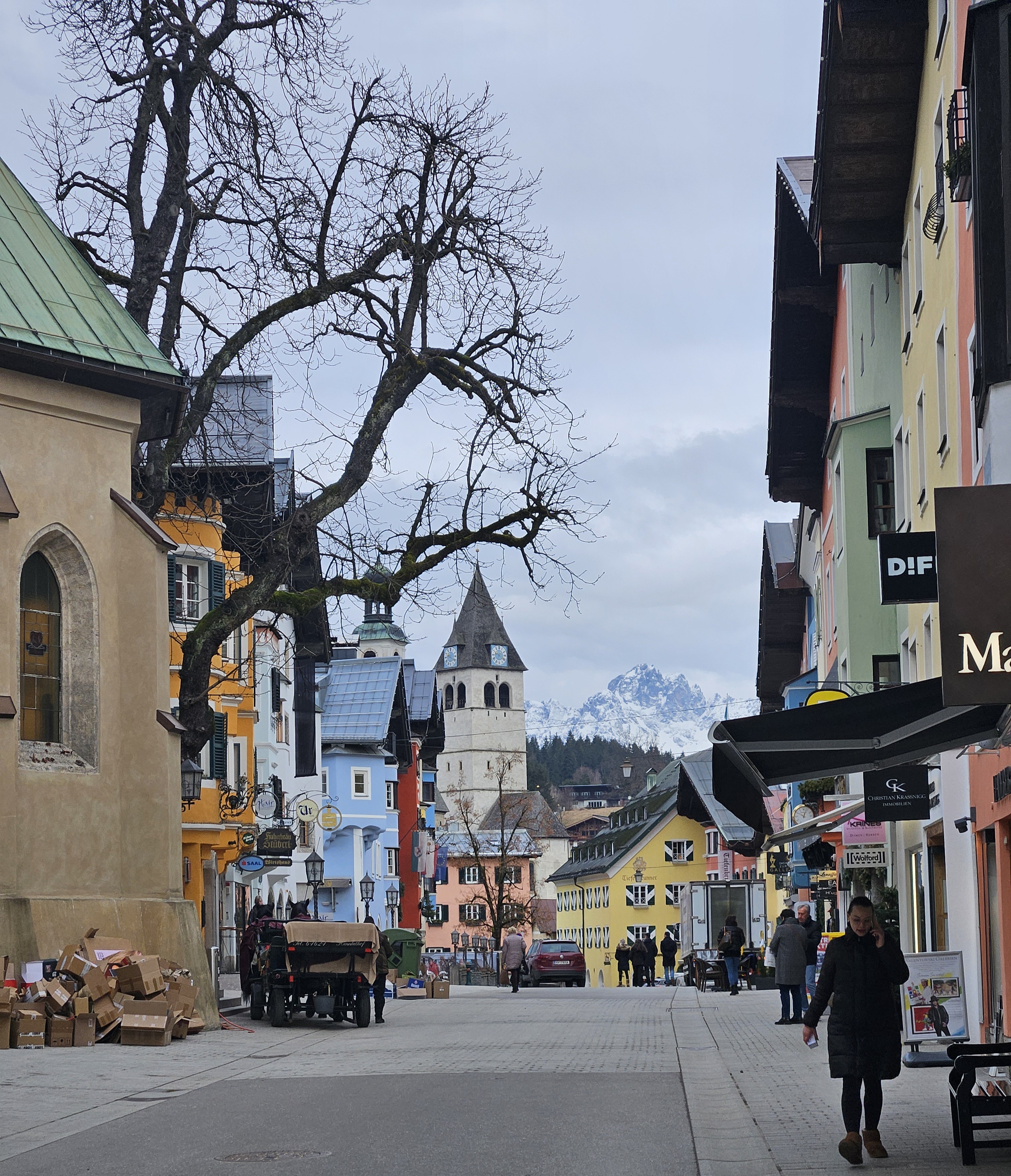
  4. Kitzbuhel: Best for its very cute pedestrian town centre, it’s great for good skiers and non-skiers. There’s plenty to like in Kitzbuhel, a cute pedestrian town centre with pastel coloured houses, shopping, and a great ski area for beginners, intermediate and advanced skiers. They now have a Zuma, so you know it is firmly on the modern ski map. It is very easy to get to: Munich is 2 hours away and Salzburg only 1.5 hours away. The only downside is its low altitude so there is a chance of little snow at times and for the die hard skiiers, the skiing might not be challenging enough. Where to Stay: Kitzhof for a modern hotel, Weisses Rossl to be in town. Stanglwirt Hotel is ridiculously cool for kids, I haven’t stayed, but many of my friends have, with its own children’s farm and children’s water world.
  5. Lech: Best for a world-class skiing area, luxury accommodation, and an understated, sophisticated family friendly vibe. Many of my friends go to Lech, which scores a lot of points; excellent skiing, excellent food, family friendly, and plenty of luxury hotels but is discrete and sophisticated. Princess Di brought the boys here if that describes it in a sentence. It doesn’t have a big party scene, so skip it and go to Verbier if that’s what you’re looking for. It has very good snow throughout the year, so that’s another positive point for it. Where to stay: Hotel Aurelio and Hotel Arlberg.
  6. Megeve: Best for foodies and its picture-perfect historical village centre, with horse drawn carriage and cobblestone streets. Mevege’s village centre is absolutely gorgeous: it is a traffic free medieval area with cobbled streets and is full of fairytale charm. In addition, it has so many excellent restaurants, including many Michelin starred restaurants like Flocons de Sel, and the mountain restaurants are all fun, proper, sit down restaurants than fast food canteens like L’ideal 1850, Super Megeve, Le Refuge etc… It is easily accessible from Geneva so a quick-hop from the airport. The downside is that it often lacks snow, given its low altitude and there is very little ski-in, ski-out accomodation. Where to Stay: Four Seasons Megeve, Les Fermes de Marie, L’Alpaga.
  7. St Mortiz: Best for old world class and timeless elegance. St. Moritz is glamourous, but old school glamourous, (unlike the newer Courchevel), where heavy draped ski hotels are still par excellence. Its life revolves around the Hotel Kulm, the first five star hotel in St. Moritz and whose Kulm Country Club re-opened, and Badrutt’s Palace, both Grande Dame hotels of St Moritz. I was once invited by Lehman Brothers for a ‘Closing Weekend in St Moritz’ when I was 27 years old (possibly why Lehman went bankrupt), when I stayed at the Hotel Kulm and where history reverberates in every room of this hotel. I had an amazing weekend of skiing, paragliding, and partying at the Dracula Club. Of course, St Moritz is where the Snow Polo World Cup is and remnants of the Winter Olympics can be found on the ice skating rink and bobsleigh track. For the real jet-setters, there is a private jet airport right there, and taking off from it is really a one in a lifetime experience, otherwise, you can fly into Milan and drive from there. Where to Stay: Badrutt’s Palace, Hotel Kulm.
  8. Val D’Isere: Best for a combination of high altitude skiing, affordable and luxury hotels, and partying at the original Folie Douce. Val D’Isere is where the French have spilled over to since they were priced out of Courchevel, and new hotels have followed. Val D’Isere is well known for its party scene, with the first Folie Douce created in 1974. The village still fulfills the ‘cute Alpine village’ feel with traditional chalets and charming streets. There’s great high altitude and off piste skiing, and a variety of hotel options, ranging from luxury (Les Airelles), to affordably cool (Experimental Chalet) to lots of more affordable boutique hotels (Hotel Mont Blanc, Hotel Yule). This one is good for people looking for all price ranges, snow-sure conditions and a party vibe. There is also the highest hotel in the Alps, Le Refuge de Solaise, for a completely unique experience: you can only access it via gondola, so you don’t want to miss the last one! Where to stay: Les Airelles for luxury, Le Blizzard for mid luxury, a friend recommends Maison de Famille Les Cinq Freres for a more reasonable bill (but needs to be booked a year in advance) and the Experimental Chalet for a stylish stay.
  9. Verbier: Best for Sloaney-ponies looking for English style apres-ski and advanced ski slopes. It’s been called ‘Sloane Square on Slopes’ and ‘London in the Alps.’ Oh the Brits love Verbier in Switzerland and it is really like a London ski outpost. It has everything a Brit could love: great skiing (not for beginners), plenty of Brit loving apres ski, close to Geneva, and the Farm Club, the quintissential iconic club, which really hasn’t changed much since the 70s and, yes, it is where Prince Andrew used to go to. James Blunt lives there and even has a chair lift named after him. The Farinet apres ski is still as popular as ever, and there are plenty of nice mountain restaurants but it is not the ‘fur-wearing’ set or too chi-chi crowd, which appeals to the Brits. Where to Stay: The W hotel if you want the ultimate modern hotel experience, which is often named best ski hotel in the world, although I prefer La Cordee des Alpes, which is a boutique, chalet-style hotel with yummy restaurants.
  10. Zermatt: Best for serious skiers looking for snow-sure conditions and for its car-free village and picturesque train ride. It’s also known for the Matterhorn mountain and the highest gondola in the world (3883m). Someone told me it’s not for beginner skiers but caters to intermediates very well, and for serious skiers who want absolute snow-certainty. The village is cute and there are plenty of nice restaurants on the slopes, as well as plenty of apres-ski for the partiers. We know people who go there every year who like the combo of beauty, year round skiing, and challenging off piste, without all the chi-chi of some of the other resorts. Its biggest draw-back is the limited ski-in, ski-out options, which for me, is not an option but a necessity. Where to stay: Omnia, Mont Cervin Palace Hotel, BeauSite hotel.

BOOK YOUR NEXT SKI TRIP WITH BOOKING.COM

Standard
Family Life, Travel

5 Best Luxury Hotels in Rome With Kids: Where to Stay & What to Do

All Photos Courtesy of NHYM 2024

BOOK YOUR TRAVEL TO ROME WITH EXPEDIA.CO.UK

Recommended age: 8 years and upwards

When the kids were younger, I dreaded taking them on city trips for 3 reasons: 1) Tantrums and museums do not mix 2) Their attention spans and boredom just didn’t make it worth it 3) They were going to forget it all anyway and leave me traumatised. So, now that they are older and can actually appreciate the joys of city trips, I have been taking them (dragging them) to all the major cities I once avoided. Last year, my kids were learning about the Roman empire in school, so this was an opportune time for them to visit Rome in the fall, when the crowds weren’t as dense and the summer heat had gone.

I had last been in Rome when I was 20 backpacking across Europe with my uni friends. I know, you’ll say, ‘You? Backpacking? I can’t imagine that!’ Well, it was even mentioned in my bridesmaids wedding speech, so yes you should believe it. In any case, all I remember from Rome was a blur of stracciatella gelato, being turned away from the Vatican for our skirts being too short, and getting pink-eye from a cockroach falling onto my pillow from our not-so-luxury hotel. This may be why I am now obsessed with luxury hotels!

So my memories of Rome were – literally – blinded and blurry so, this time around, I asked a friend from Rome for tips for a perfect Roman Holiday.

BOOK YOUR TRAVEL WITH BOOKING.COM

Where to Stay:

1. Splurge: Hotel de Russie

    If you have endless zeros in your bank account and want this to be a once-in-a-lifetime experience, Hotel de Russie really would be my number one choice: right in the middle of all the attractions, shopping nearby, and that gorgeous courtyard and terrace, there’s no other hotel in Rome quite like it.

    Book Hotel de Russie with expedia.co.uk

    2. Family Friendly near the Vatican: Villa Aggripina, The Leading Hotels of the World

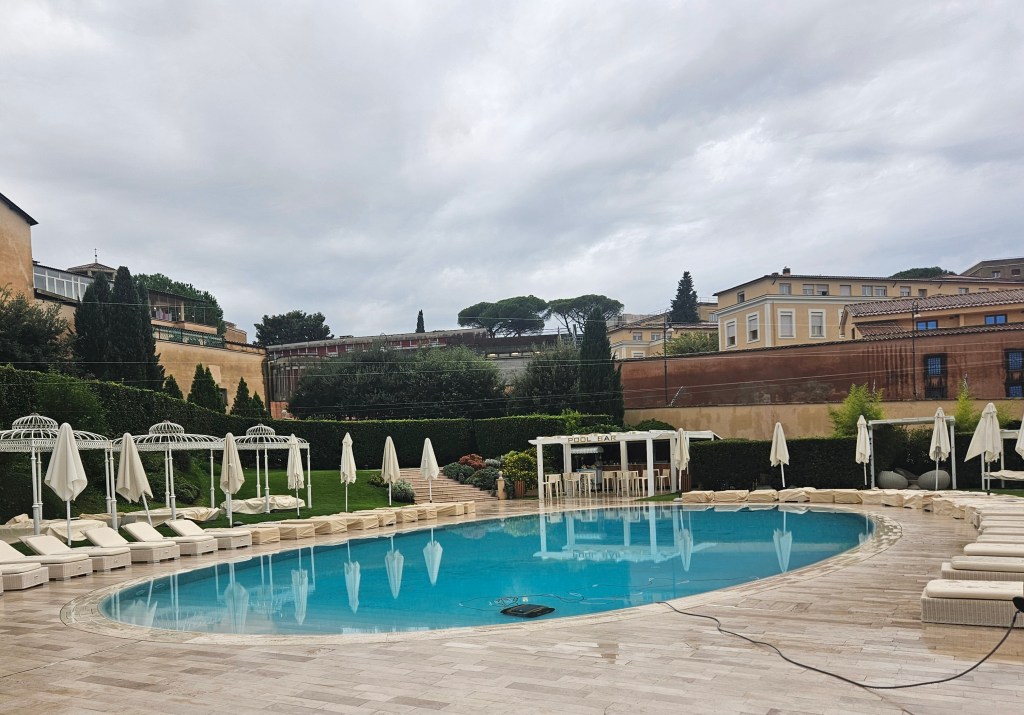
    We chose to stay at the Villa Aggripina, which combined historical elements of a former palazzo, as well as a swimming pool when the kids were bored of sight-seeing. It is an oasis just a 15 minute walk across the river to all the sights, but offers a swimming pool, and tons of outdoor gardens and space for the kids, this one is perfect during the sweltering summer.

    BOOK VILLA AGGRIPINA WITH EXPEDIA.CO.UK

    Villa Aggripina Swimming Pool NHYM 2024

    My friend also recommended these hotels:

    3. Boutique hotel:Hotel Locarno for its location and rooftop terrace.

    BOOK HOTEL LOCARNO WITH EXPEDIA.CO.UK

    4. Hip: Soho House Rome. Other friends who were in Rome at the same time as us stayed at the Soho House, for a stylish yet reasonably priced hotel stay.

    5. Palazzo Luxury: Anantara Palazzo Naiadi made it in the Conde Nast Reader’s Choice Awards 2025 Rome list, so you can be sure it’s going to be good. It’s big, bold, beautiful and has all the five star trappings you could ask for without spending a whole month’s salary on it. BOOK HERE FOR ANANTARA PALAZZO NAIADI, A LEADING HOTEL OF THE WORLD

    The Trevi Fountain NHYM 2024

    BOOK YOUR TRAVEL WITH BOOKING.COM

    What to Do:

    Explore Top Attractions with an exclusive Golf Cart Tour: Our friend’s suggestion and our favourite activity of our Roman adventure had to be the Golf Cart Tour. The golf cart agilely weaved its way around the city and monuments where cars couldn’t pass and gave us a whirlwind tour of all of the most important sights in Rome. It’s perfect when you don’t have a lot of time in Rome and can be adjusted to fit your itinerary, spending time at sights you want to see, and whizzing by those with too many tourists. We hit all the major sights: the Trevi Fountain, Pantheon, Colloseum, Spanish Steps etc…

    BOOK YOUR GOLF CART TOUR HERE

    Sunset at the Colosseum: During the day, the crowds abound at the Colosseum, so my recommendation is to do this sunset tour, when the crowds have gone back to their hotels and you can see it in its sunset splendour.

    BOOK A SUNSET COLOSSEUM TOUR

    The Pantheon NHYM 2024

    Gladiator school: This one is unbeatable for the boys, 2 hours of gladiator schools to get rid of all their energy and frustrations. BOOK GLADIATOR SCHOOL HERE

    Percy Jackson Tour for Kids at the Capitoline Museum: Of course, for the Percy Jackson fans, this tour has been made specifically for them in mind. Friends did it and loved it, my Roman friend told me.

    Colosseum Walking Tour: Skip the lines with this guided tour of the Colosseum, Roman Forum and Palatine Hill. BOOK YOUR COLOSSEUM WALKING TOUR HERE

    BOOK GLADIATOR SCHOOL HERE↗

    Breakfast tour of the Vatican and Sistine Chapel: Go to the Vatican early in the morning to avoid the crowds and make sure to book their breakfast there. It can book up months in advance so make sure to book ahead of time. BOOK YOUR BREAKFAST, TOUR THE VATICAN AND SISTINE CHAPEL HERE

    The Spanish Steps NHYM 2024

    Shopping: Our golf cart tour ended at the Spanish steps, which was a perfect place to go shopping at all my kids’ favourite Italian stores: Subdued, Brandy Melville etc… This was the perfect end to a morning of sight-seeing.

    BOOK YOUR TRAVEL HERE WITH BOOKING.COM

    Where to Eat:

    Truffle Pasta at Hotel de Russie Terrace NHYM 2024

    Of course a trip to Rome wouldn’t be a trip to Rome without eating out. Here’s a few recommendations:

    Il Marchese Restaurant: I loved Il Marchese, which serves typical Roman cuisine, it is cozy and local for a true Roman experience.

    Pier Luigi Restaurant: More gastronomic, this one serves delicious seafood to everyone from Bezos to Leonardo di Caprio. The tables outside are prime spots for watching life go by in Rome.

    Roscioli: Amazing bakery, where you can get delicious pizza on the go, or book a table for lunch.

    Hotel de Russie Terrace & Courtyard for Aperitivo: Even if you aren’t staying at Hotel de Russie, you can always enjoy its terrace for Aperitivo or its gardens for lunch. One of my favourite meals in Rome.

    Pier Luigi Rome. NHYM 2024

    This trip to Rome completely exceeded my expectations and I loved everything about it: the hotel, the food, the shopping and the sightseeing. Everywhere you turn, there are ruins and remnants of Roman history which continues to fascinate us today. I can’t wait to go back!

    xx

    NHYM
    BOOK YOUR TRIP TO ROME WITH EXPEDIA.CO.UK

    Standard
    Family Life, Travel

    Hotel/Estate Review: The Newt in Somerset & Its Dragon Bonfire & Apple Day

    BOOK YOUR TRAVEL WITH EXPEDIA.CO.UK

    All photos courtesy of NHYM 2022

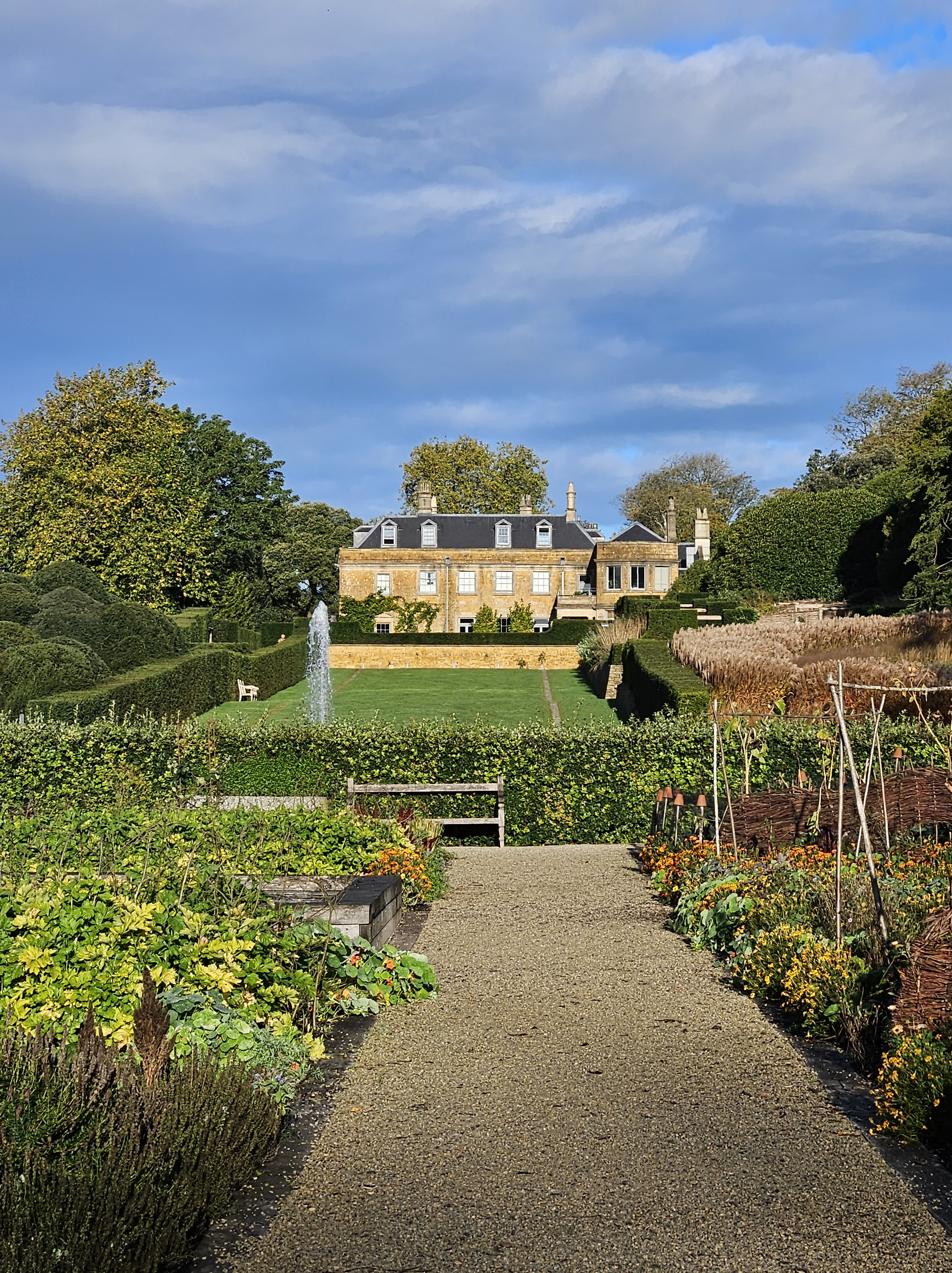
    A few years ago, our family had to go to Somerset for some reason or other during the October break, and of course Babington House was fully booked, so that’s how I discovered The Newt in Somerset. How had I not known about the Newt before?! The Newt is the creative brainchild of South African Billionaire Koos Bekker and Karen Roos, who developed Hadspen house, an 18th Century Georgian Manor house, and its 800 acre estate into a luxury hotel and extensive gardens, restaurants, cider orchards, beezantium, and much, much more. It opened in 2019 and is so much more than a hotel and that’s what keeps it being awarded the UK’s best hotel in the Conde Nast Readers Choice Awards 2020, 2021, 2022, 2023, 2024, 2025.

    Bonfire Night NHYM 2022

    We were there right around Bonfire night and we saw the biggest and most sculpturally complex bonfire we had ever seen: it was in the shape of a dragon and you can compare the gardener for size comparison in the photo. It was huge! And how did they manage to create this? Cranes? Drones? Ladders? It was so captivating that I was just sad they were going to burn it and it would disappear after bonfire night: with all the effort put into it, I wanted it to be kept as a permanent fixture.

    NHYM 2022

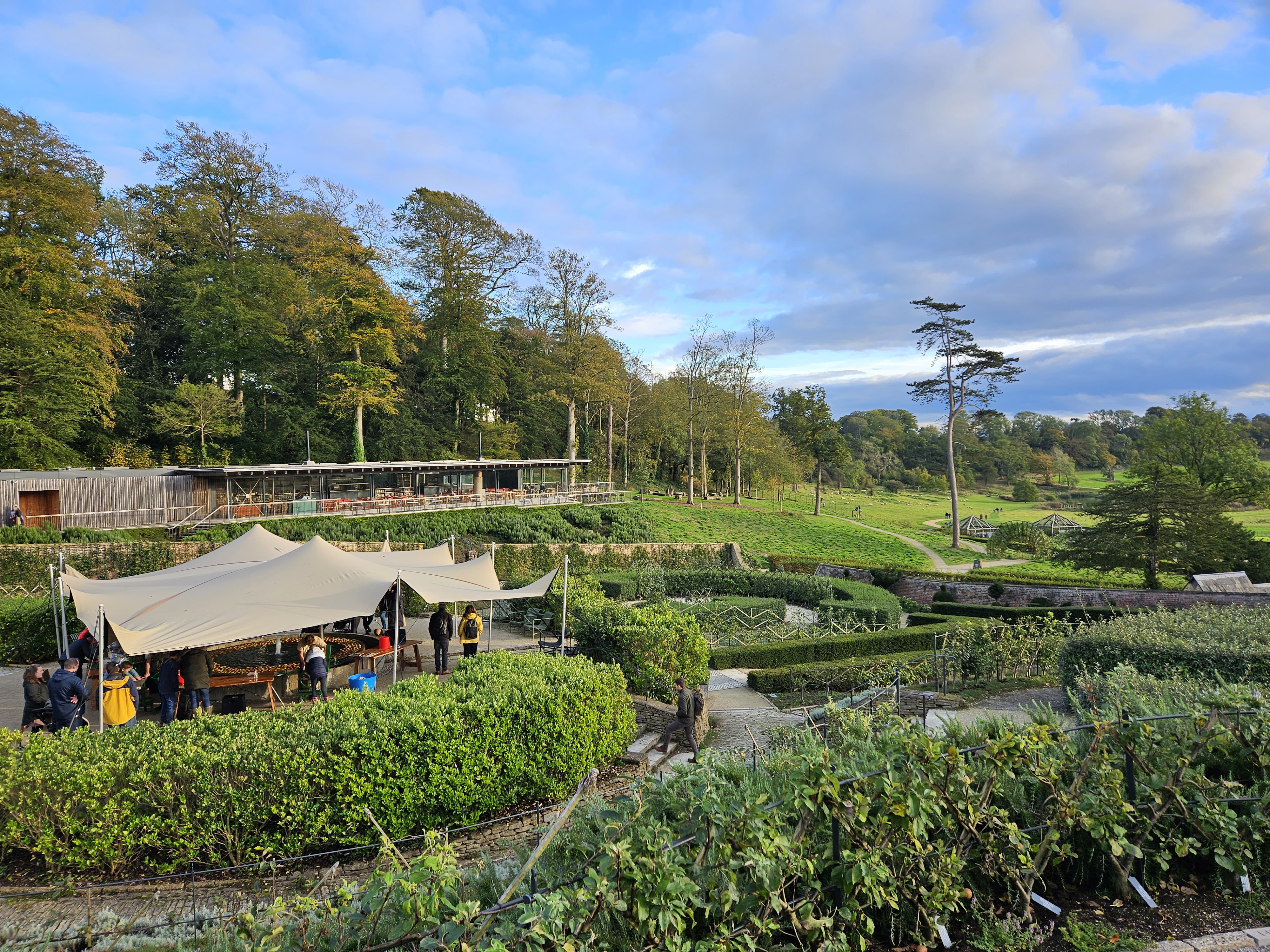
    In the front fields of the Manor house were sheep munching on grass and on the far side of the Manor house, landscaped gardens a la francaise were for walking around and enjoying their beauty. Beyond the gardens and grounds right around the main house, you can take buggies to explore the rest of the vast estate, which I can assure you, was one of my kids’ highlights and are free to be driven around to see the apple orchards, vegetable and fruit gardens, the Farmyard and more. Luckily enough, I didn’t crash it (unlike a friend visiting Fisher island who famously crashed a golf buggy while slightly intoxicated, you know who you are!!)

    NYHM 2022

    The beauty of the manicured gardens against the rolling hills of Somerset really are aesthetically perfect in my eyes; both elegant and wild, they include fountains, paths and mazes.

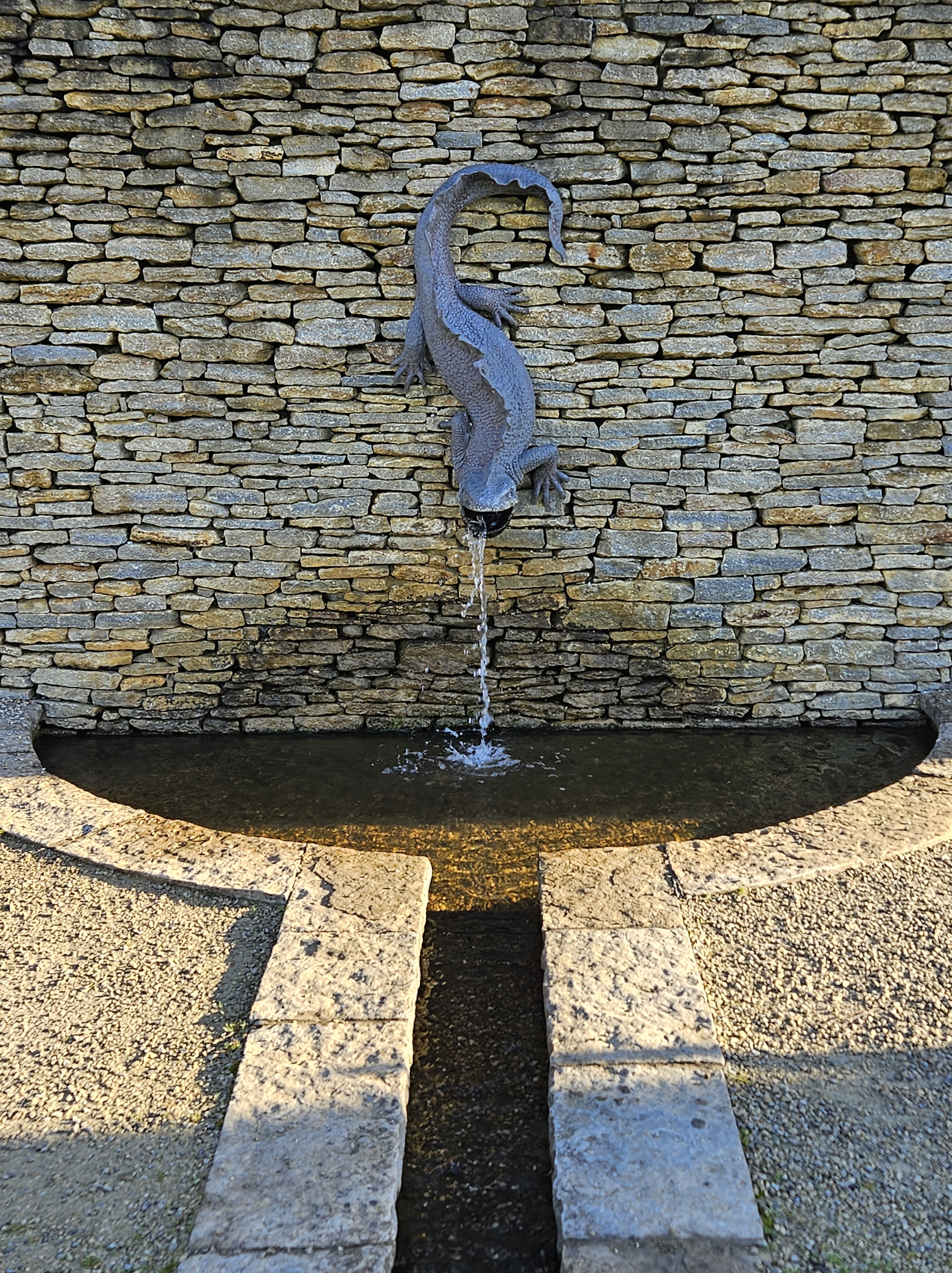
    The Garden Cafe at the Newt & the Apple Festival Fountain NHYM 2022

    There are multiple restaurants that use the estate’s produce and put it at the forefront of each of their dishes. The staff tell us that they are aiming to be fully estate-to-plate in the future, for now everything is locally sourced, with all the produce grown on the estate. They hope to turn the estate into a fully sustainable endeavour in the future and the waiters know exactly the origins of everything on the plates served: the vegetables were from the vegetable patch, the beef from some of their cows in the pastures across the road, and the pork from the pigs at a farm next door. The enthusiasm of the staff was a testament to what kind of estate it is trying to be: sustainable, local and community oriented.

    The Newt Spa 2022

    The Spa was serene and had an inside/outside pool which my children loved. For once, kids were allowed in the spa, so that scored big points for them. The hotel rooms were nice, my favourite being the family two bedrooms in the main house, and although there were a few service glitches around slow breakfasts and appliances that didn’t work, it didn’t take away from the whole experience. All the staff were locals, who were very excited to be part of this vision and very eager to please.

    BOOK YOUR TRAVEL WITH BOOKING.COM

    APPLE DAY!

    Apple Festival at The Newt 2022

    NHYM 2022

    But one of the most exciting parts of our trip was that we were there – coincidentally – for their annual Apple Festival. It really made our trip go from a nice country weekend away in a luxury hotel, to a unique, fun, engaging, and unforgettable festival getaway. On display, there were every kind of apple grown on the estate. Who knew there were so many kinds of apples?

    NHYM 2022

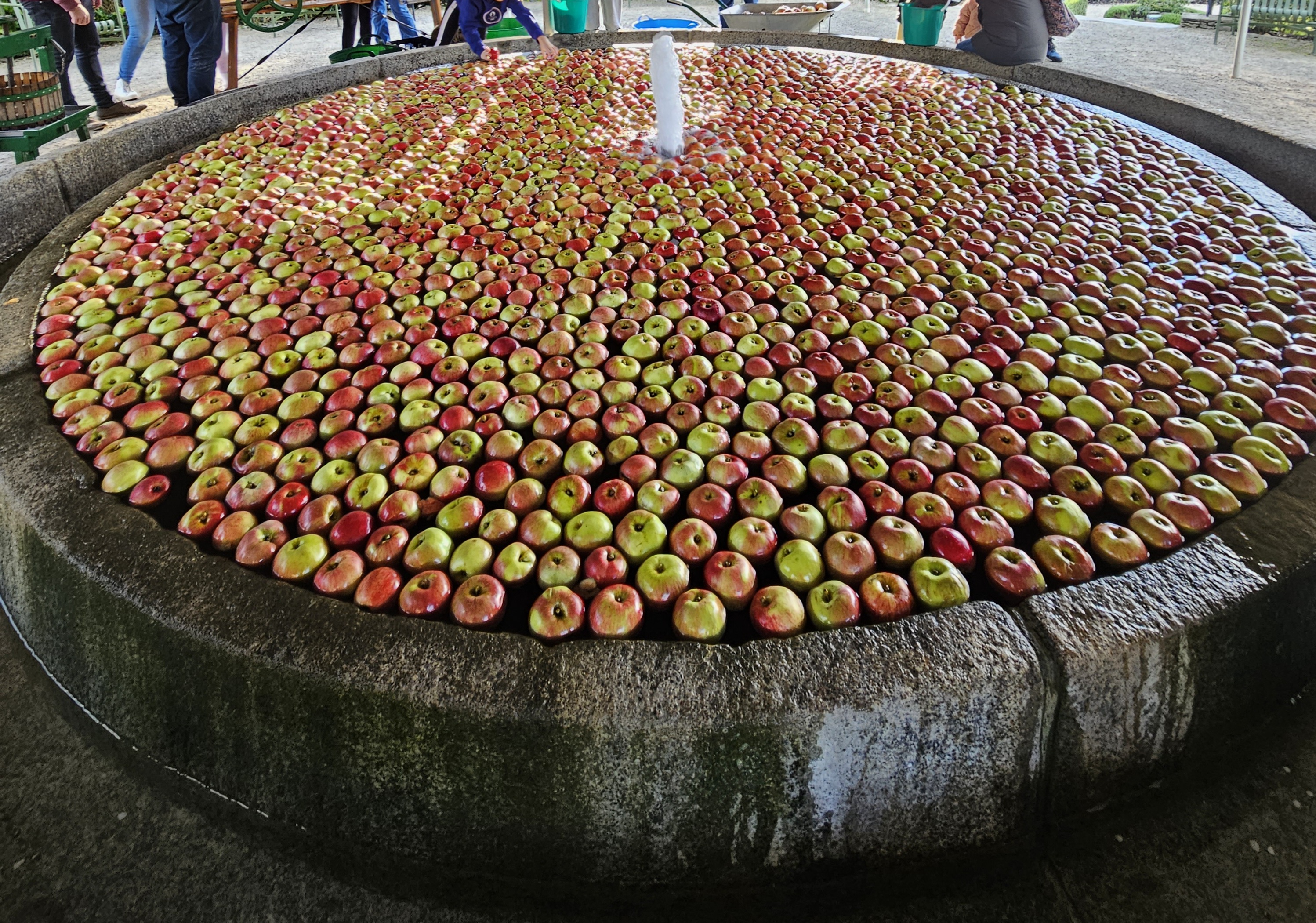
    The best part of the festival was that we were able to make our own apple juice: one of the fountains was filled with hundreds of apples that you could fill a bucket with and then turn into apple juice with a hand press. After collecting the apples, we did a lot of squishing, turning and pressing, making our own apple juice, which we funneled into glass bottles and were given to take home with us. It was so fun and it felt so productive and satisfying making our own juice. The juice was so fresh and without any additives; it was as natural as it could be. Who knew I would be so happy to become an apple farmer for the day?

    NHYM 2022

    NHYM 2022

    Not only did they have apple pressing, but every kind of possible apple games galore you can imagine: apple toss, apple skittles, apple bowling, and toffee apples and roasted pork & apples to taste. We were amazingly lucky with the weather, and the whole experience was unbeatable (friends who went when it was pouring rain another time, did say they were disappointed with their Newt stay, so check the weather ahead of time to make the most out of your trip).

    NHYM 2022 Apple Skittles

    We loved the whole experience. My children were at the right age to fully engage and enjoy all the games, food and estate exploration. There are also multitudes of events throughout the year for members: woodland tours, garden tours, Christmas trails, a Beezantium, cider tastings, Bee safaris, Roman Villa tours etc etc etc. Need I say more? We didn’t even get a chance to see the whole estate in one weekend and even if you don’t stay at the Newt, you can always book tickets to explore this magical estate and the annual memberships are really reasonably priced, especially to support what they are trying to create.

    This is a really special place indeed, created and conceived to glorify all things gardening, apples, cider, woodlands, farmlands with sustainability in mind. Finally, what I loved the most, was that behind all this ‘Billionaire fantasy estate’ talk, was a place that was giving back to its community: the events sell out quickly and you can see how much it is not just about creating a luxury hotel that only a few can enjoy, but creating a place that welcomes the whole community, providing jobs, food and special events for the whole community throughout the year, that is loved by all.

    xx

    NHYM

    BOOK YOUR NEXT TRIP WITH BOOKING.COM

    Hanging squash NHYM 2022

    Standard
    Family Life

    Digital Anxiety: What I’ve Learned Parenting in the Digital Generation

    ‘Technology is a useful servant but a dangerous master.’ Christian Lange Nobel Prize Winner

    A few months ago, I was organising a sleepover for my daughter and her friends when I was accosted by one of her friend’s mums asking me: ‘Does your daughter have a cell/mobile phone?’ with the same intensity and anxiety as if she were asking me if we kept guns at home (something that does happen in LA I’ve been told!). Taken aback, I wasn’t quite sure how to answer. Sheepishly, I replied, ‘Yes, but she’s only allowed an hour a day.’ I was faced with a blank stare. ‘She has time limits.’ No change. ‘She doesn’t have TikTok or Instagram. Only 5 minutes of Snapchat a day just so she can communicate with a few friends.’ Still, my response landed flat. I soon realised that there was no way I was going to assuage her or win this argument. Then, she proceeded to lecture me that I needed to take away her phone at night for the sleepover. I was so petrified and paralyzed that I failed to find any witty comebacks or to tell her that my daughter’s phone shuts down at night anyway so it wouldn’t be a problem.

    Of course, I wish I had said: ‘But I am a good mum! Both my children are top schools in the UK! One of them is a national level performance athlete and the other was invited to Mathematics Masterclasses at the Royal Institute of Mathematics! They’ve both sang at the O2 with Paul McCartney! Both their names are inscribed in plaques in their primary school’s dining hall for their contributions to their school! They’ve been called perfect and I’ve literally been asked for breakfast for parenting/schooling advice!’ But instead, I was speechless, #mumshamed. I had yet again, been made to feel like a #Mumfail.

    Turns out, I am not even safe from the Phone Mafia even in my own house. Social media and screens have been the hot topic of every Whatsapp parent group, and only more spurred on by the book ‘The Anxious Generation by Dr. Jonathan Haidt,’ and the TV Series ‘Adolescence.’ At school, we are constantly being given lectures and workshops on how to navigate screen times and social media and on Digital Safety. It’s a hotter topic than the European wildfires.

    Let me clear, of course I often wish my kids never had phones, but this is where we are and there’s no going back but with some common sense and a lot of parent involvement, you can really get through this unharmed. It is the parents’ responsibility once they give their child a phone to know what is going on with their kids online. I mean, you should really know if your child is on Onlyfans or watching pornography or bullying others, that is a parenting responsibility.

    I don’t think the issue is black or white and I do not inherently think that phones are ‘good or evil.’ It’s how they are used that matters. As a scientist, I do not believe that phones and social media are the sole cause of all of our children’s mental health struggles (the scientific basis of the Anxious Generation book is at best loose, and doesn’t distinguish causality from correlation and omits other world variables on children during the same time period). I do agree that it can be very scary navigating unknown teenage internet territory and we should be wary and involved in their digital lives. I do believe that social media companies have a responsibility to keep children safe, rather than feed them dangerous algorithms of starvation, suicide or other ridiculously inappropriate content. It’s a complex subject to say the least, but it’s important not to label phones or all social media as the root of all evil.

    Both of my children received phones when they started senior schools and started travelling to school on their own. They use their phones to call me when they’re late, when they’re lost and when things change like the tubes being suspended and they have no way home. They use the bus and tube timetables in the morning to get to school, and googlemaps when they’re walking around in the neighborhood. (And I can track them when they are riding the bus in the wrong direction!). Unlike Dr Haigt’s argument about kids being less independent when they use a phone, it’s been quite the opposite; they have the confidence to travel alone in London because they can look up maps any time they get lost and know they can call me any time.

    Not only that, but they keep in touch with friends from all over the world, speak to their grandparents on Whatsapp video calls who live across oceans and channels, and use phones creatively all the time for capcut videos, sing-a-thons, travel vlogs and learn how to draw online. They follow sports and news and share their interests with us. It’s not all bad. The reality, is we live in a digital world, and we, as parents, have to help them navigate the digital world in a positive way.

    But I agree that there is plenty of value highlighting the need to be aware of what’s going on online in our children’s worlds: pornography, strangers connecting with them, cyberbullying, blackmail but also, screen addiction, shortening attention spans, and obsession with looking a certain way. It can happen to adults, but children will evidently be more vulnerable. There is so much to unpick when discussing screens, the internet and social media usage but we, as parents, have a duty to try to keep them as safe as possible. For now, I will contribute some tips I have learned so far while parenting the digital generation.

    Here are my top 10 Tips of dealing with social media and screen time:

    1. Digital Education: talk, talk, talk to your kids about what they might come across online and what they need to do to keep themselves safe. Talk about how much screen time is healthy and go over their screen usage together. Encourage them to choose their own ‘screen time’ goals and see if they can achieve them. Set healthy boundaries for them.
    2. Use the Parental controls to block any unwanted websites: violence, drugs, pornography etc…
    3. Time limits can be valuable. Iphones have inbuilt time limits in their parental controls settings, otherwise Qustodio or Family Link are useful apps until they are responsible for their phone usage. But it’s not only how much time they spend on screens, it’s also quality: learning a new language and learning how to draw online is not the same as talking to a stranger online or ‘doomscrolling.’ A big benefit of Qustodio is you can actually see what your child has been scrolling online: you can see how much time they’ve spent on Life360, Whatsapp, Capcut, etc… and what searches they’ve done on online.
    4. The first most important tip from psychologists: Take phones away a night. My children’s phones shut down from 9:30 pm to 7am to avoid the screaming and shouting matches when I try to take them away.
    5. Make sure you have screen – free meals and screen – free time as a family. Remind them that there is life outside the internet. How you use screens as a family is important: model positive screen usage.
    6. Ensure that they have IRL hobbies and friends. Complete seclusion from real life is a warning sign.
    7. Phones are not the only screen that can cause harm: ipads and other screens can also affect your child so make sure those are protected too.
    8. Wait – as long as possible – to give them social media apps: Insta, Snap, TikTok, Youtube shorts. They are not necessary for 10 year olds. Whatsapp is a personal choice, but it has its benefits for communicating with friends. You can also give them phones with only child-friendly apps and without social media, adult content, and addictive apps like the Balance Phone, which is a great option.
    9. If your schools use Ipads, you can also invest in apps that can shut down the internet to school devices and home internet once they have finished their homework. Youtube is a big culprit for time-wastage, and it can be hard to control, given that many school iPads allow Youtube. A bit drastic, but when Youtube is driving you crazy, it’s good to know you can still have control!
    10. The most important tip, is to continue to connect with your child, so that if anything ever were to come up online, they feel comfortable opening up to you. This is my most valuable tip. If you’re going to give your child a phone, try to have a good grasp of what’s going on in their digital lives, just as you would in real life. You might not know everything that’s going on, but you should try to have a good understanding of your child’s screen life, just as you do in real life. It’s not always easy, but at least they know that they have someone to turn to navigating this new world.

    We are the first generation of parents dealing with screens and social media and there is no set path or blueprint on how to best support our kids; we are learning as we go along. Not only that, but the effects of screens on our kids (and us) keeps emerging. We can only try our best. Just try not to make other mums feel bad about their choices: we’re all trying to do what’s best for our kids.

    xx

    NHYM

    http://www.nottinghillmummy.com

    Standard
    Family Life, Social Commentary

    Senior School Anxiety & The 11+ Exam V.2

    Lately, I have been approached by a lot of mums going through the 11+ process who have been asking me for advice. When I was trekking through that minefield, I had – luckily – some elders who gave me a lot of advice: some good, some excessive, some useless, but mostly I was really grateful to have people to talk to. Earlier in the year I wrote my first blog on senior school anxiety: nottinghillmummy.com/2022/04/20/senior-school-entry-anxiety/ and here is the follow up blog Version 2.0.

    (Note Bene: these were all mothers who had been through the process and had a lot of opinions. I did not speak to other mums going through the 11+ at the same time for a number of reasons, but mostly because they would stress me out or put their stress on me.)

    This is how I navigated the 11+: I took advice from those who knew better and learned from them. Here are some of the questions I wish someone had answered before I started the whole process.

    When do you start prepping for the 11+ process? Every parent is different. Of course, you will always have the kids who know their entire multiplication tables by the time they get to Year 1, but those are the outliers. And those who might be behind academically might need to start earlier. But as a general rule, a good start for the 11+ prep is one year from the exam. So if it is in December, start one year before. Some will start later, like in Easter, but I think that’s too late in case your child has weaknesses that you haven’t spotted yet. You can start more than a year before, but in my opinion, that’s a bit of overkill and might burn out your child too soon. With the one-year-before approach, I would advise little and often. If you decide to start earlier, one good thing to do is to assess your child to make sure they are on the right path. Your school should have given you their test scores and you should have a decent grasp of how they are doing. This is where you can see what your child needs to work and address those weaknesses early on.

    How do you prepare for the 11+?

    Everyone wants the magic formula. Of course, tutors pretty much have to be involved if you are aiming for the most academic schools. Very few get in with little tutoring. It is still possible, but your chances are inevitably lower. For good, but not the most academic schools, you can get away without tutoring if your child is bright enough. For me, as I already mentioned, I addressed my child’s weaknesses and put my focus on that. In that way, I didn’t have to over-tutor and kept the process relatively gentle (unlike some parents who were tutoring every day). But many people feel that’s not enough so in general, for those aiming at the most academic schools, I found that most parents have two tutors: one for English and one for Maths. On top of that, Bond books and atom are very popular (Bond books for general knowledge and atom for exam practice). After that, everyone has their own methods and needs and each child is an individual.

    How do you choose a senior school? Now, everyone has different requirements and values so the schools you like are not necessarily the school other people will like. So every person should just do what’s right for them. But don’t always voice your opinions. (Recently, someone I know went to visit my child’s senior school on open day and came back to me and said, ‘I hated it!’ which is probably something one should avoid doing).

    The way I chose our school is as follows:

    • Academics
    • Proximity to home
    • Curriculum
    • The School & Facilities
    • Social environment
    • Extra-curriculars

    I’ll go through each topic in some more detail.

    Academics is of course on top of most people’s list: will the school challenge my child but not push him/her too far? Schools that are going to be too intense may not be the right school for your child, which is why sometimes over-tutoring can backfire. Do you want your child to be a big fish in a small pond or a small fish in a big pond? You could argue for both. But you want to make sure the school is right for your child: I repeat, not all these pushy schools are right for your child. There are plenty of kind, good schools particularly for those who are less academically inclined.

    Proximity: Proximity is very high on my list on how to choose a school. I wanted a school that wasn’t too far from our home. Ideally under 30 minutes, but 30-45 minutes max. Having spent 3 hours on the school bus every day growing up, I didn’t want them to have the same experience. In addition, you want your child to have friends that live nearby and not have friends scattered far away. This makes it so much easier for playdates. Even for boarding schools, it is much easier if they are closer so your child can easily come home for the weekend. Also, how are the transport links? Because soon enough, they will want to travel on their own.

    Curriculum: Not all schools have the same curriculum so make sure it is a school that offers what you are looking for. For example, some have only A Levels whereas some offer the International Baccalaureate as well. Most academic schools will have a broad, somewhat similar curriculum, but some will have more languages on offer for example or be more focussed on sciences and maths.

    The school & facilities: My child immediately wanted a school with sports facilities and big spaces. It’s not easy to find that in Central London, so until you see the schools, it will be hard to decide. Just as someone might like a smaller school saying it is more cosy, someone else might say the exact same school is very cramped. So everyone has their opinions and needs. Facilities like a nice gym, a climbing wall, modern 6th form areas, swimming pools, sports pitches on site all add something as well. Also, do you like the neighbourhood? Is it somewhere you could see your child hanging out after school?

    Social Environment: This is an important topic that is just as important as the other ones. Every school has a reputation: ‘the urban school, the drugs and alcohol school, the trustafarian school, the super-academic school with mental health issues, the sporty school, the ED school’ and the list goes on. Every school has a reputation and you will have to decide which aspects you are willing to live with and which you just don’t want to ever come across. The schools have very different feels to them and it has to be the right environment for your child.

    Extra-curriculars: It’s not the most important on the list, but is still to be taken in consideration. Some schools offer lots of sports, some offer music, some art etc… Just have a look at them and see if there is something your child would like to do. A few jumped out when we were visiting schools and it was one of the big reasons my child chose that school.

    At the end of the day, each child will end up where they should end up. And if it doesn’t work out, they can always change schools. This school will not determine the rest of their future, so relax a bit, take my advice and all will be well. I asked my child what they liked about their school and the reply was: 1. My friends 2. The lessons 3. The atmosphere. So far, it sounds like we made a good choice.

    xx

    NHYM

    http://www.nottinghillyummymummy.com

    Standard
    Family Life

    Senior School Entry Anxiety…

    They say a picture conveys a 1000 words and for those of us who live in London and have children who will – inevitably – take the 11+ exam (or 7+/13+) to gain entry into the most coveted senior school places, the 11+ conjures images of bloody backstabbing, intense Olympic-tutor-training and Edvard Munch type fear. (For those of you who don’t have kids – stop reading – or this will put you off kids forever).

    But don’t worry. You are not alone. And you will survive. I promise.

    The bad news is that it can be as bad as you can possibly imagine, I mean tears, pill-popping and lying-to-your-best-friends-face bad. But the good news is that it doesn’t have to be and I am here to hold your hand and guide you through the whole process. Not sure if I will actually help, but think of me as a ‘survivor’ and someone who made it out alive in – barely – one piece.

    I was very lucky in that I had friends with older children who had gone through the whole process and gave me their infinite wisdom, some of which I ignored completely, but a lot of it which helped me infinitely. And for those who don’t have that luck, well it’s your lucky day, because I can be that person. Hopefully, in the next few blog posts, I can give you some of my wise advice.

    So to start, ** drumroll* here are my 10 Commandments for getting through the 11+ and Senior School Exams:

    1. Always remember, it’s the school that chooses your child. Not the other way around.
    2. Look at schools that will fit your child, not where you think you would like your child to go to.
    3. It’s not about what you want. As a matter of fact, it’s not about you. Did I already mention that?
    4. Over tutoring may not be a good thing. They may end up overanxious, stressed out, eating too much or too little, and end up a statistic in the increasing teen mental health problem.
    5. Don’t listen to what so-and-so is doing. Anyway, most of them are lying.
    6. As a matter of fact, if you really want to stay sane, don’t talk to any of the other mums at the school gates. Choose a few close confidantes that you can talk to, who will support you, and that’s it.
    7. Make a plan of what you think is reasonable for your child. Don’t over tutor just because you think you have to. Have a clear idea of where your family values lie and don’t waver.
    8. Have reasonable expectations and be realistic – if your child is in the bottom sets, don’t try to make them sit St Paul’s. That’s just a waste of time and energy.
    9. Don’t stress, or your child will stress too.
    10. Remember, it’s your child’s race, not anybody else’s. So support them, love them, guide them, but the rest is up to them.

    So remember, just Keep Calm and Carry On and you will get through this.

    And Good Luck!

    xx

    NHM

    Standard
    Family Life, Social Commentary

    The British Schooling (Torture) System

    th-1

    Images courtesy of the internet. NHYM 2018. 

    Lately, all we’ve (the mums) been talking about has been exams: it is January when most of the 7+/8+/11+ exams are happening and it’s been dire: chatter about who’s taking what exam, to what school and who’s been getting interviews etc…and those that say they aren’t taking them and you see them at the 7+ hiding in the bushes. I have consciously not yet entered this quite cutthroat world, but eventually, I too will have to face it.

    I was having lunch with a friend who is slightly panicking because she has never tutored her kids but now has the 11+ coming up next year and is worried about her child not getting into any school. She is adamantly against tutoring, but I told her that the problem is that everyone else is tutoring, so you need to know what you are up against. She then said ‘This is crazy. What are we doing to our kids? And to what end?’

    I have heard of people going on anxiety pills for the infamous 11+ – and that’s just the mums – and children not able to sleep at night because of exam stress as young as 7 years old. Everyone is getting stressed: fathers losing their s*&t and mums taking a year off prestigious jobs to overlook their children’s progress. But it is starting earlier and earlier. Children are already being tutored in Reception and by Year 2, everything accelerates when those looking to do the 7+ are already learning the Year 4 curriculum. I’m being advised by a friend on what activities my child should be doing right now for her future university application. It’s all very fast, too early and too soon.

    th

    So, why are we doing this to our children? The most prestigious girls school in the UK has an extremely high rate of mental health issues: anxiety, depression, eating disorders and personality disorders. Until this changes, I would never send my children there. And the girls consortium who is trying to scrap their exam because of exam stress. Isn’t it all a bit much for 11 year olds?

    I understand the statistics though: the better school you get into, the higher chance of going to a good university, and the better the university, the better chance of getting a good job. This is all true, by all means. But it’s not the only way. There are ways of getting to the top without these illustrious diplomas and distinctions.

    My alma mater receives 30,000 applications for something like 1,500 spots. There is no way I would get into it these days. But I have hope that there are plenty of great schools/universities – perhaps not the best but very good – that will provide my children with a great education. So, let’s all relax a bit. If you’re not trying to be a billionaire/Fortune 500 CEO/Entrepreneur of the year, then you should relax too (and if you are, good luck to you). Most of us are lucky enough to send our children to good schools, and most likely they will end up in good universities. So, let’s just take a step back and realise that the world will be run by robots anyway, so your kids might as well have fun along the way.

    xx

    NHYM

    http://www.nottinghillyummymummy.com


    Here’s some advice to parents from Hannah Ogahara, who runs a local tutoring agency Love Learning Tutors:

    How to be involved in your child’s school life without being overbearing

    It is easy enough to be involved with your child’s studies when they are young but what do you do when your child grows into one of those moody teenagers? We’ve all been on the receiving end of some harsh backchat. It can leave you feeling helpless when all you want to do is to offer your years of experience. Let’s face the facts, it may be a challenge to be your child’s best friend over the next few years, but here are some simple things you can do to ease tension at home and stay involved without becoming overbearing.

    Actively listen

    One of the greatest frustration that teenagers face is when parents make assumptions about what they should be doing. This is quite a general one and includes friendship groups and interests as well as school life. It may be that you don’t remember the particular teacher they are talking about, or perhaps you weren’t really listening because you were juggling many tasks when they confided in you. We recommend discussing school life with your child and making an effort to really listen and retain what you are being told. This builds trust and the knowledge that they can come to you for guidance.

    Be aware of your communication style

    If you find yourself getting into frequent arguments with your child about school, change your approach. Try to avoid confrontation and change the focus to constructive solutions. Veer away from the nagging voice and steer towards calm, pragmatic tones. Ask open question rather than questions that can be quickly shut down.

    Swap “Have you done your homework?” and “Where is your homework?” for “Do you have a lot of homework?”, “Tell me about your homework, is there anything interesting?”

    Ask small questions often

    Get into the habit of asking small school related questions often so that it doesn’t come as a surprise when you need to bring something up. Try remember who is teaching what, which teachers they like and which they don’t. This shows that you’re really listening and taking interest. It makes it easier for your child to keep you in the loop.

    Celebrate

    Let your child know when they are doing well and celebrate successes together. Everyone loves to feel successful and valued. No matter how big your child gets, no one is immune to a bit of praise (provided they feel they have earned it). This should encourage your child to tell you how things are going on a frequent basis.

    Share stories

    Carefully select stories to share about your school experiences. Regardless of whether they are things that went well or terribly wrong. A good story provided at the right time can allow for bonding between you and your child. It helps your child understand that you’ve been through the same things are sympathetic towards them and their academic journey. Be on the same team rather than opposing sides, “you are wrong” vs “I am right”.

    Less “When I was at school it was much harder because…”

    More “I had a similar teacher who used to…”

    Don’t take it personally

    This is one of the hardest tips to put into practice. Having your child snap at you can leave you feeling distraught; and feeling that your constant efforts to provide them with the best you can, aren’t being appreciated. Unfortunately, adolescence is a difficult time for everybody. The above suggestions will help with positive and open communication, but things will not always go to plan. When this happens take a deep breath and step away for a moment, rather than letting things escalate.

    www.lovelearningtutors.com

    Standard
    Family Life, Social Commentary

    To Tutor Or Not to Tutor, That is the Question…

    images-2

    We’ve all been there: sitting at the dining room table trying to get our child to do their homework and secretly wanting to scream:’ FINISH YOUR DAMN HOMEWORK SO I CAN GET ON WITH MY LIFE!’ But instead, we smile at them, restraining ourselves, and quietly tell them they need to finish their homework and bribe them with a bit of TV… And then the day arrives when you throw in the towel and call in the professionals.

    When I first heard about tutors for children as young as 6 I thought it was absolutely absurd! Of course, I now know that it happens even earlier, and that there is a lot of discussion about whether to get a tutor for your child or not. I never thought I would be one to encourage the use of tutors unless necessary but I’ve come to think of it as I do breastfeeding: If it works well for you to breastfeed (ie. your child is naturally clever and doesn’t need extra help), wonderful, lucky sod, but if it doesn’t work out for one reason or other, well I’m all for bottle-feeding and tutoring.

    Now, there is a stigma around tutoring, and many mums hide that their children are getting tutored. More than once, I have had friends who have asked their children’s friends’ nannies for playdates, for the nanny to reply ‘sorry, so-and-so has tutoring that day’ even if the mother of the friend previously denied ever using a tutor. I also know that this tutoring phenomenon is not only prevalent in London, but is in New York (obviously) and is around in other places like Switzerland, Canada, and Monaco.

    I think there is a definite place for tutors, especially when a child falls behind in class and needs extra help, then tutoring is absolutely warranted. The problem I find though is that in London everyone ends up being tutored and to keep up, you have to get your child tutored and it isn’t about choice or innate intelligence but how many hours of tutoring they have each week. I mean, I know a 4 year old who already has English tutoring on Mondays, French on Tuesdays, Maths on Thursdays and endless other activities to fill their week! How is anyone else supposed to keep up?

    For now, I am holding off having the tutoring conversation with myself, but one day, I realise that I might have to address it. I have been approached by many tutors over the past few years and took the opportunity to ask one to answer a few questions about whether to get a tutor or not, for those who may be interested. It’s quite long and a lot of it you may feel you already know, so feel free to jump to the questions that interest you. More posts on education coming soon!

    I have no personal experience with this tutor therefore cannot endorse them in any way. This is purely for informational purposes and to get a tutor’s perspective. 

    Milestones Education: WHY GET A TUTOR? 

    1. Why should we use tutors in the first place?                                                                                                                                                                                                    

    There are so many reasons why tutors are valuable. It is not a one size fits all reason; every individual will have different reasons for getting a tutor. However, from my experience, I can tell you the common reasons people use us. The individual attention that the student gets with using a tutor is extremely valuable. It is something you cannot even get at the top independent schools.

    • Good tutors have the time to truly identify the student’s weaknesses and strengths and then correct them. In the traditional classroom, it is impossible for one teacher to meet all the needs of each student and ensure everyone is up to speed on a topic all the time.
    • If you have a good tutor, there will always be a much higher level of direct communication and feedback with not only the student, but the parent too. This is invaluable. When I train my team of tutors, I always work on ingraining those communication and feedback skills Learners cannot progress without understanding and reflecting on where they are at, where they need to be and how to get there.
    • If you do not believe your children are thriving or reaching their potential this would be another reason. Stagnancy in learning is just as dangerous as decline and strips the student of their confidence. A tutor can fix these problems in a way that often a school or parent cannot.
    • If you have important examinations or are trying to achieve particular goals and grades, you may not know how to get there or it may just be extremely difficult to do so without some help.
    • Most importantly, the proof is in the results. Students progress further and achieve more with tutors.

    2. When is the right time to start using a tutor? 

    • When there is a need or a goal that needs to be achieved by a certain time. Also when a subject is causing the student to struggle, feel stressed or under-confident.
    • In general, tuition has greater effects in younger children. From my experience and through my study of cognitive science, I know that younger primary school children have a higher level of learning plasticity in their brains. That is, their learning capacity is much higher than at later stages in life; it is still within the exponential part of the learning curve. The key to giving children the best push ahead in education is to give them a solid foundation during the early stages. It is much harder to go back and fix problems than to build the learning bricks correctly in the first place.

    3. How do you help a student who is falling behind?  

    • It also means formulating a robust plan that can be regularly reviewed and monitored for progress. It means setting targets, expectations and goals. It means having a competent teacher who can support the student and help the student learn in a way that is individualised. Students need guidance and direction but they also need praise and feedback.
    • In short, you must first identify the student’s starting points through thorough assessment. They must be able to understand where they are and where they are going.
    • Over the years I have been very passionate about addressing how to most effectively conquer this scenario. It actually lead me to formulate the Milestones Methodology with contributions from psychologists, scientists, and schools.

    4. How do you make learning fun and interactive? 

    • This is so important, I am glad you asked. There needs to be a bond between tutor and child; there needs to be trust. At Milestones, the team is trained to use visual organisers, apps, videos, podcasts and a large variety of multi-sensory stimuli. Where appropriate we get our students to enter competitions, do reflective diary entries, create presentations and go out to utilise skills in a way that aligns with their interests. Active learning is the only way students truly commit content to memory. You cannot use tutors that will sit and talk at your student for two hours and then set homework. This is passive and the student’s progress will be minimal and slow. You have to engage in discussion and use reflexive questioning to get the student to think about answers or conclusions themselves.

    5. What about students who use tutors to get into top schools like Westminster/St Paul’s but then can’t keep up? 

    • This should never really be the case. To me, that says you have had a poorly skilled tutor or the student should not be applying to such schools. This is one of the reasons why I must assess the student to determine their starting points and so I can give an honest indication to the parents of what can be accomplished. You should not be sending your child to a school where they will be continuously struggling. There is a big difference between challenge and struggle. On the other hand, a good tutor would prepare the student in a way that puts them ahead long term. I do not just equip students to pass exams; I equip them with the skillset and knowledge to enter a trajectory of excellence long term.

    6. How do you help children handle the pressure of tutoring and school competition? 

    • Students should not be in a position where they dread tuition. A supportive system should be created where the tutor is easing the pressure not causing it.
    • At the same time, this is why I said communication is important; the student has to be on board and understand the purpose of tuition.
    • Again this is why emotional intelligence development is important to me; you want to instil the skills of time management, discipline and self-motivation to deal with any pressure and come out stronger.

    7. What do you think of the concept of it being better to be at the top of a lesser school rather than at the bottom of a best school? 

    • How can a student be pushed further or challenged if they are comfortably sitting at the top already? This question assumes these positions are static. If the student is at the bottom of the best school, which means there is room for growth and a plan should be established to put that in motion. The key here is to remove the generalisation and comparison. The focus should be on finding a position in the school that is best for that individual. If a student is at what is generally considered the ‘best school’ but the student is unhappy, struggling and receiving inadequate support than clearly it is not the best school.

    8. What advice do you have for children going through exams? 
    One of my past students discusses how he dealt with the pressure and competition here> https://www.youtube.com/watch?v=-Xsw5WEUAUM

    9. What advice do you have for parents trying to give their kids the best education?

    • Ensure the choices you make are for the right reasons. Do not try and get your child into a school because everyone else is.
    • Get the child assessed; if not by an experienced tutor then get input from your child’s school. Your priority is to establish what is best for them and find the place that will best develop their unique potential.
    • Get involved with your child’s education. Understand what they are finding difficult and what they find easy. Get your child help when they need it- do not let them struggle alone.
    • Do not take schoolleague tables so literally. They are really quite misleading. The factors used to rank them cannot really be standardised and controlled for. There are also many things you need to take into consideration beyond grades in a school!

    10. What’s the best advice you have on navigating the super competitive school process in the UK?

    • You need to understand what you are up against. The level of competence today is higher than ever. Even within our cohort of students there are an increasing number of truly brilliant international students well ahead of British education that are now taking top places. Therefore you need to be realistic about the level your child needs to get to and objectively decide whether it is right for them.
    • It is always good to talk to someone who understands the process well and has gone through it before; teachers, parents, students and tutors. The consultations I carry out with parents can be really eye opening and help you decide on next steps.

    Anne-Marie Idowu. –Director & Head Tutor of Milestones. http://www.milestoneseducation.com

    xx

    NHYM

    http://www.nottinghillyummymummy.com

    @NHyummymummy

    Standard
    Family Life, Social Commentary, Top 10

    Top 10 Tips: How To Raise Resilient Children

    This blog was originally conceived as a way of escapism when I was faced with adversity and I had always wanted to keep it slightly surreal and fictionalised in the NHYM world. But we really are living in a time of high alert and we are all a bit more nervous than before that it would be impossible for me to ignore what is going on. So, to keep this post on a positive note and instead of just feeling helpless, it has led me to research and write about how we can teach our children resilience.

    We all think that all we want is for our children to be ‘happy’ but this is too simplistic when reality will throw traumas, tragedies, and disappointments at us, some of which are out of our control. We, as parents, instinctively want to protect our children, but there comes a point when we can no longer protect them. What we can do, is to teach them resilience and how to bounce back from life’s challenges.

    Here’s a round up of my Top 10 Tips on How To Raise Resilient Children: 

    (researched on the internet and parenting books)

    1. Don’t accommodate every need: If children are never exposed to uncomfortable situations, they will never learn from them and how to handle being in such situations. Minor uncomfortable situations will teach them flexibility and how to react positively.
    2. Avoid eliminating all risks: Allow appropriate risks for them to learn their own limits.
    3. Teach them to problem solve: You won’t always be there to solve their problems. Teach them how to go through the process of solving a problem to equip them with their own problem solving skills.
    4. Don’t provide all the answers: Don’t immediately rush to answer all the questions your child may have. Show them how to answer their own questions, promoting inquisitive minds and how they can answer their own questions.
    5. Let your kids make mistakes: Failure can be a good thing (but not too much!). It teaches them that failure is OK and that they can learn from their mistakes. See it as a growth and learning experience rather than as a negative experience. We all make mistakes, and it is important to children to know that it is Ok to make them.
    6. Help manage their emotions: Teach your children that emotions are OK, but that you have to figure out what to do next and how to manage them. For example, if they are upset at a friend, try to teach them to tolerate the emotions but that they will pass.
    7. Model Resiliency: Try to show them resiliency and be calm and consistent. We could probably all learn from this list.
    8. Determine your child’s strengths and develop them: Rather than focussing on their weaknesses, build on their strengths for them to build their confidence and know that they have their own unique talents and strengths.
    9. Build their coping skills: Everyone will face a situation when things aren’t going their way. Teach them to accept things that he/she cannot change, normalise their experience and let them know that they will get over it and get stronger from it. Positivity is also a helpful.
    10. Teach children to be independent but seek help when needed: There comes a point in each child’s life when they will no longer have their parent at their side every moment of the day to support, cheer, and help but that they can ask for help when they need it.

    So, in these times of stress, what we can do is teach our young children to become resilient, leading them to become resilient and strong adults. Let me know if there are ways you have helped to build your children’s resilience.

    xx

    NHYM

    http://www.nottinghillyummymummy.com

    @NHyummymummy

    Standard